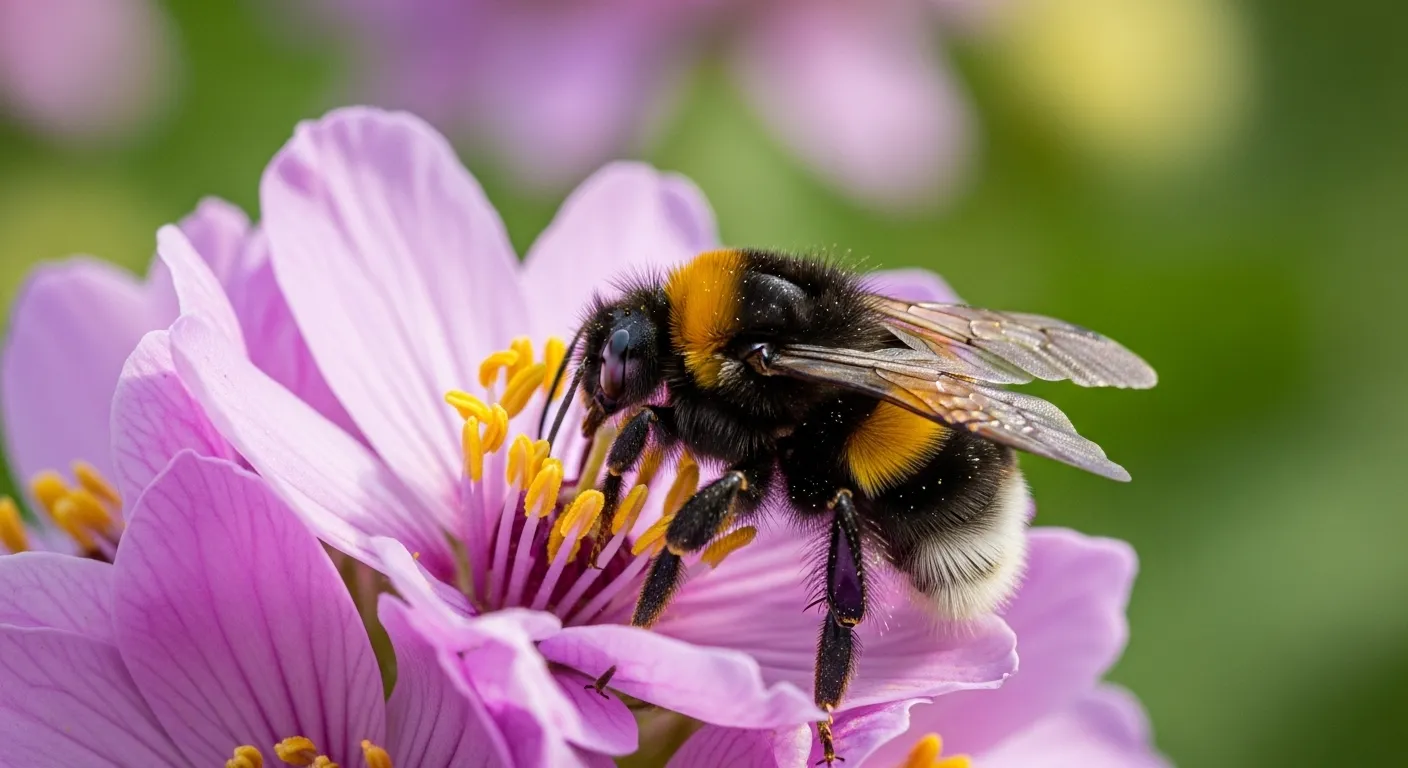
Every spring, a remarkable insect emerges from underground hibernation to perform one of nature’s most critical acts: founding an entire colony single-handedly. The bumblebee queen, often spotted in early spring buzzing low over the ground searching for nesting sites, is the cornerstone of pollination networks that sustain wildflowers, crops, and entire ecosystems. Unlike honeybees that maintain perennial colonies, each queen bumblebee starts from scratch every year, building her dynasty through biological programming refined over millions of years of evolution.
Understanding what a bumblebee queen does and why she matters is essential for conservation, gardening, and maintaining the biodiversity that supports global food systems. These remarkable organisms face mounting threats from habitat loss, pesticides, and climate change, making their story both fascinating and urgent.
Table of Contents
What Is a Bumblebee Queen?
A bumblebee queen is the reproductive female of a bumblebee colony, responsible for founding new nests, laying eggs, and establishing the next generation. Unlike worker bees that live only weeks, a bumblebee queen can survive up to a year, overwintering underground and emerging when spring warmth signals the breeding season.
The queen bumblebee serves as both architect and matriarch. She alone survives winter, carries forward her colony’s genetic legacy, and performs the exhausting work of establishing a new nest before her first workers emerge to help. During peak colony activity, a single bumblebee queen bee may lay 200-400 eggs throughout the season.
Queens are significantly larger than workers—typically 20-22 millimeters compared to workers at 11-17 millimeters. This size difference reflects their dual role as colony founder and primary egg-layer, plus the fat reserves needed for months of hibernation.
How to Identify a Bumblebee Queen
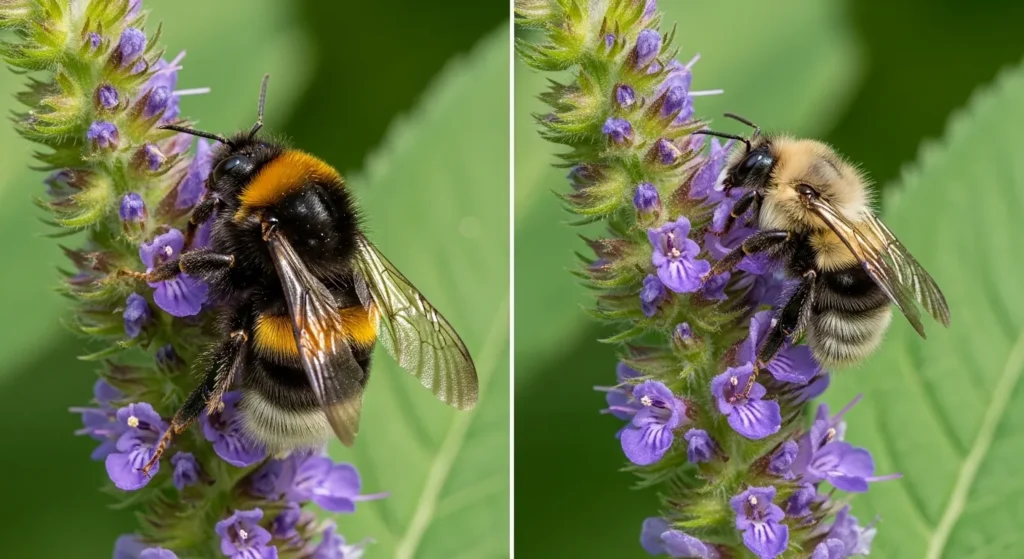
Understanding what a queen bumblebee looks like helps gardeners and nature enthusiasts recognize these important pollinators.
Queen Bumblebee Size and Appearance
Size: Queen bumblebee size ranges from 20-22mm in length, noticeably larger than workers (11-17mm) and drones (14-16mm). This robust body contains fat reserves for hibernation survival and developed ovaries for egg production.
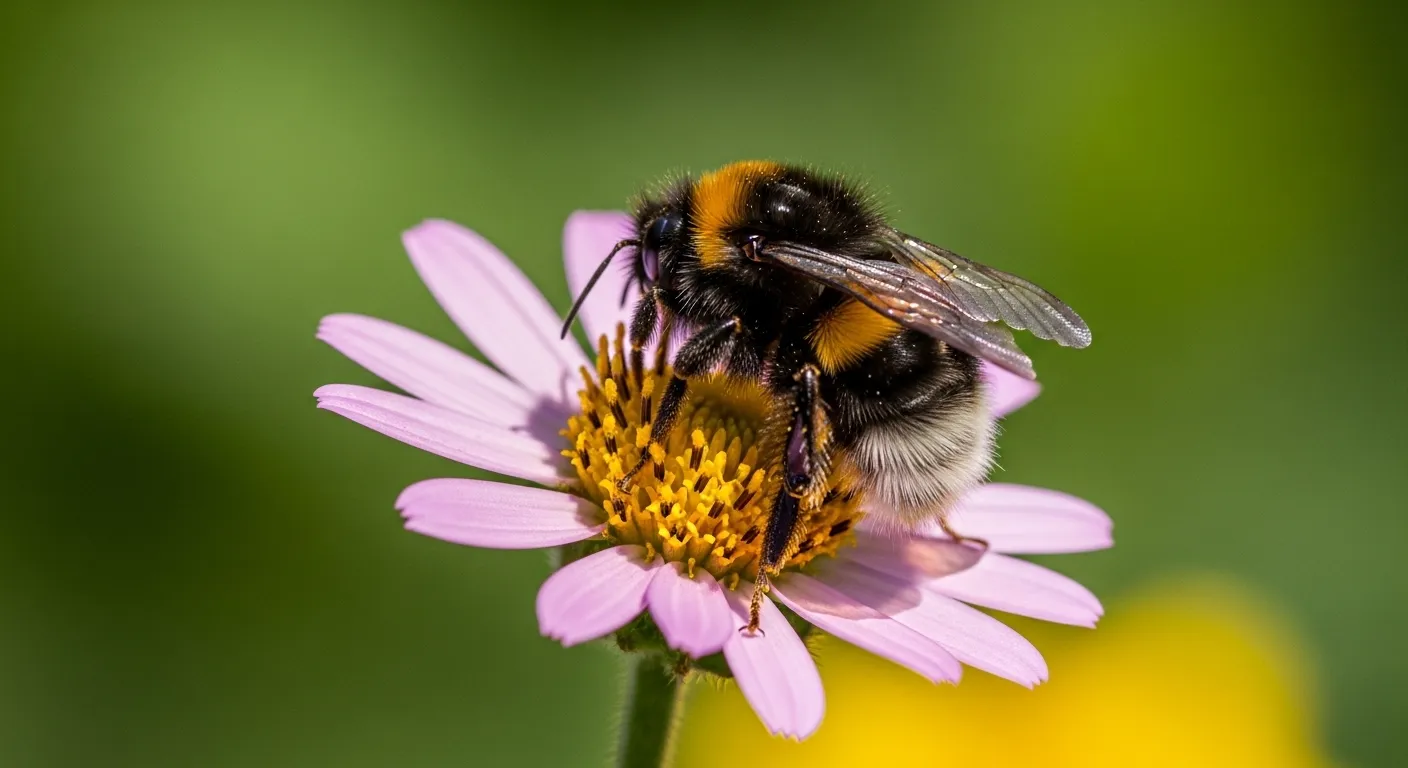
Physical Features: What does a queen bumblebee look like? She has a thick, round abdomen covered in dense hair that often appears worn or ragged, especially in early spring. Color patterns vary by species but typically include bands of yellow, orange, white, or red against black backgrounds—warning colors that advertise defensive capabilities.
Wing Condition: Early-season queens show worn, tattered wings from overwintering and intensive foraging. Newly-mated autumn queens display pristine wings.
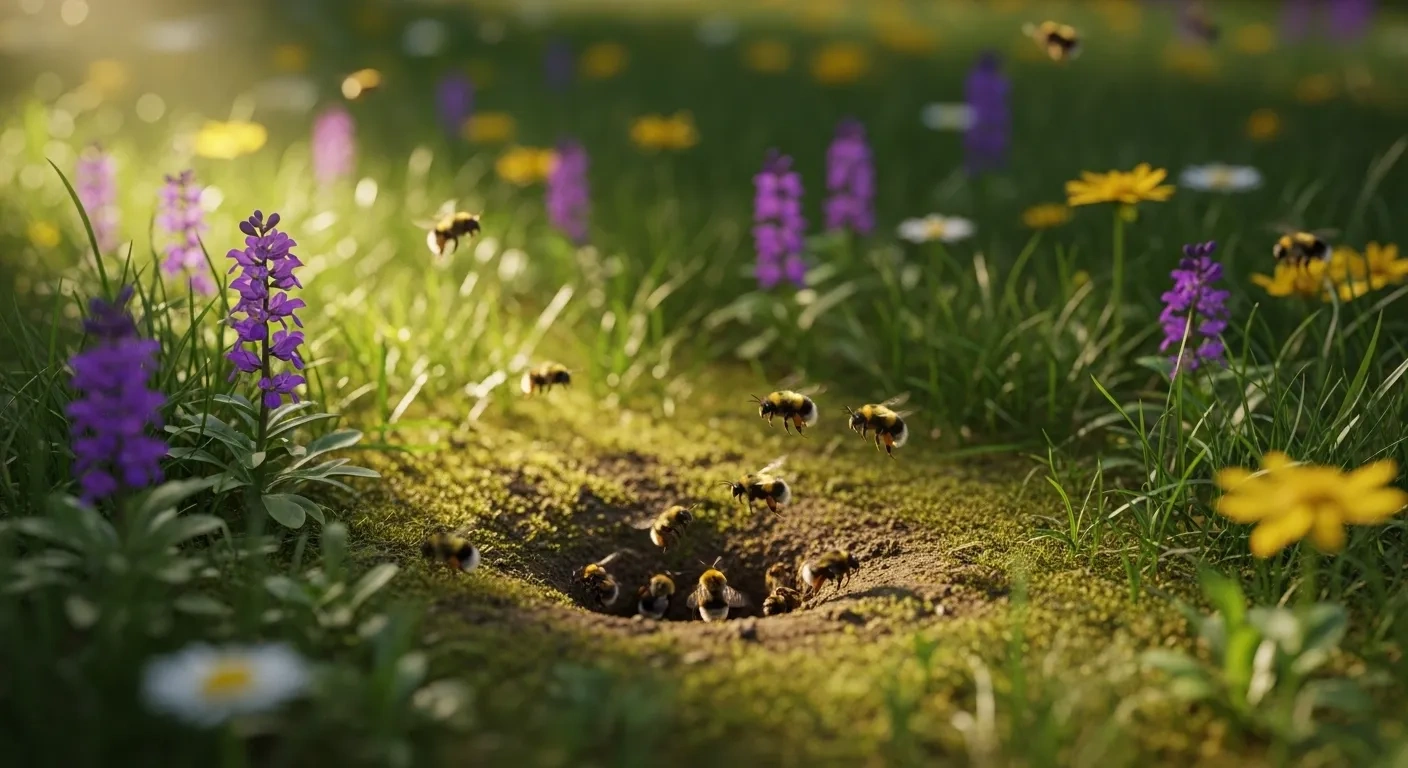
Behavioral Cues: In early spring (March-April), any bumblebee you encounter is almost certainly a queen, as workers haven’t emerged yet. Queens fly close to the ground during nest-site searches, investigating holes, grass tussocks, and potential nesting locations.
The Complete Life Cycle of a Bumblebee Queen
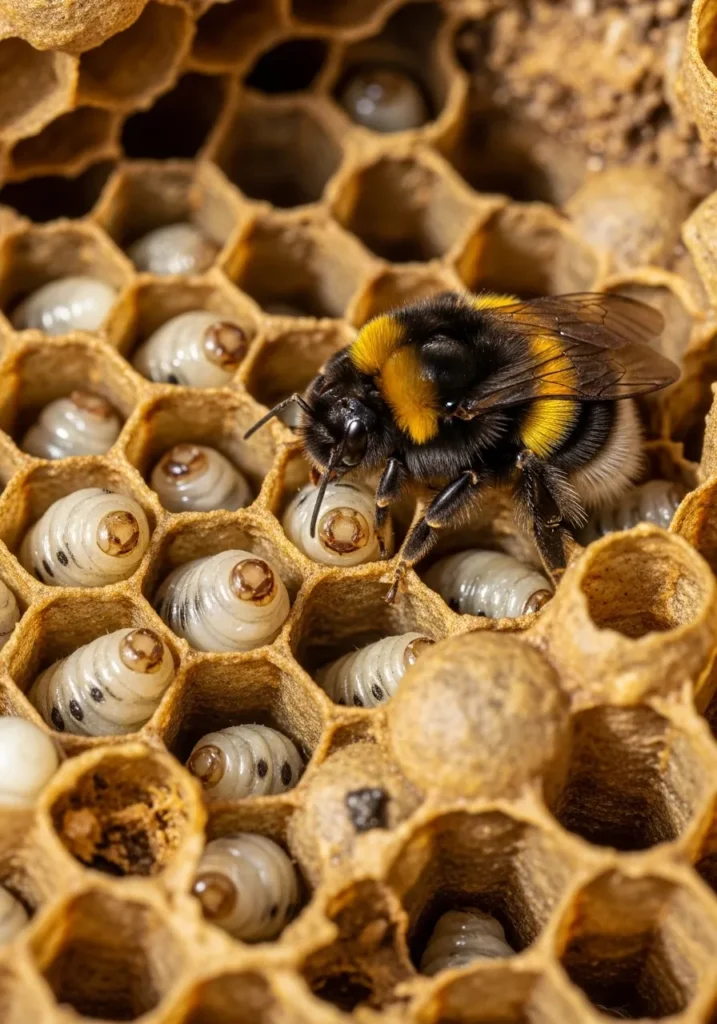
The life cycle of a bumblebee centers on the queen’s annual journey from emergence through colony founding, reproduction, and producing the next generation before dying.
Egg to Adult Development
The queen lays fertilized eggs (2-3mm long) inside wax cells she constructs. How many eggs does a bumblebee queen lay? Healthy queens produce 200-400 eggs per season, regulating production based on colony needs.
After 3-5 days, eggs hatch into larvae that workers feed with pollen and nectar. This intensive two-week feeding period fuels rapid growth through several molting stages. Larvae then spin silk cocoons and undergo metamorphosis during a 10-14 day pupal stage, emerging as adult bees.
Overwintering and Hibernation
Where do bumblebee queens hibernate? After mating in late summer, new queens burrow 5-10 centimeters underground in sheltered locations—abandoned rodent burrows, loose soil beneath tree roots, or north-facing slopes where snow provides insulation.
The rest of the colony, including the founding queen, perishes with the first hard frosts. Young queens enter metabolic suppression called diapause, surviving months without food by living off stored fat reserves.
How long does a bumblebee queen live? The bumblebee life span for queens is approximately one year from emergence to death after founding their colony. Workers live just 2-6 weeks, while drones survive only long enough to mate.
Bumblebee Queen Habitat and Nesting Sites
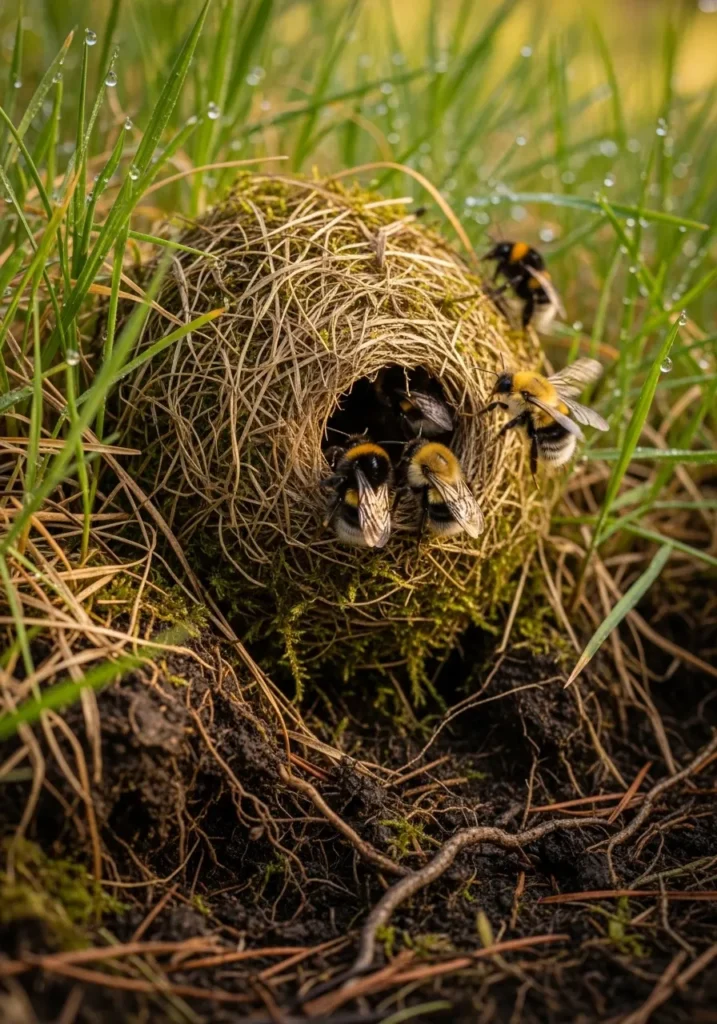
Bumblebee queen habitat requirements change throughout the annual cycle, encompassing foraging landscapes, nesting sites, and hibernation chambers.
Spring Emergence Habitat
Queens emerging from hibernation require immediate access to early-blooming flowers like willow catkins, crocuses, dead-nettle, and fruit tree blossoms. Open, sunny areas with south-facing slopes warm quickest, triggering synchronized emergence and flower blooming.
Nesting Site Preferences
The bumble bee nest location determines colony survival. Queens exhibit species-specific preferences but generally seek:
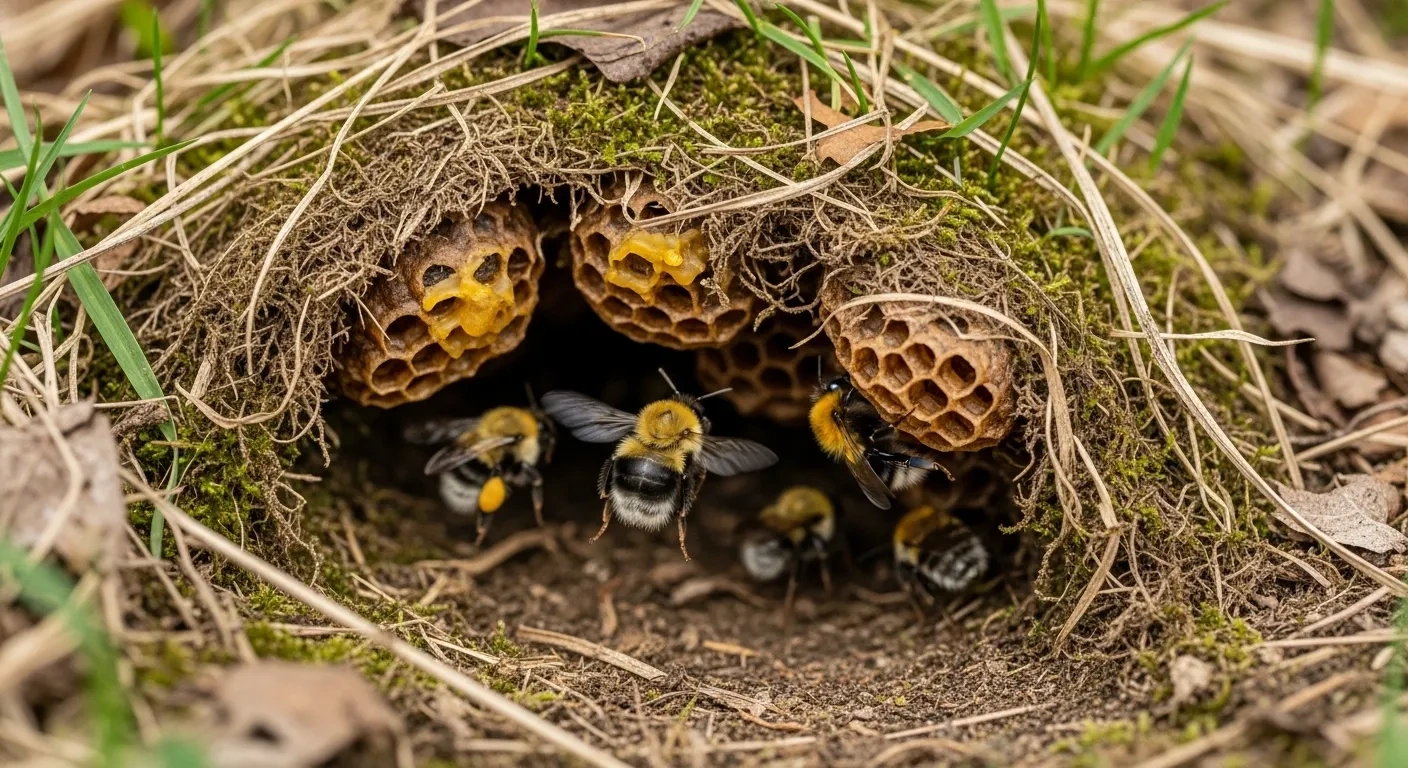
Underground Sites: Abandoned rodent burrows provide pre-formed cavities with tunnel systems. Many species preferentially nest underground where temperature and humidity remain stable.
Surface Sites: Some species readily use above-ground locations including rock walls, dense grass tussocks, bird boxes, and cavities beneath stones or wood piles.
Ideal Characteristics: Nests need 15-30cm diameter chambers, single entrances for defense, drainage preventing flooding, and insulation from temperature extremes. Queens may investigate dozens of sites before selecting one.
Foraging Landscape
Successful colonies need diverse flowers blooming continuously from spring through autumn within 1-2 kilometers of the nest. Native plants for bumblebees offer superior nectar and pollen, having coevolved with local pollinator communities. Species like wild bergamot, black-eyed Susan, asters, and goldenrod support complete colony cycles.
Nest Founding and Colony Development
When spring temperatures consistently reach 10-15°C, queens emerge with one purpose: finding suitable nesting sites.
Early Colony Phase
Does a queen bumblebee leave the nest? During founding, queens make numerous daily foraging trips, collecting nectar and pollen while performing all colony tasks alone. She constructs wax pots for storing food and brood cells for eggs, regulating temperature through muscular heat generation.
This exhausting 3-4 week period represents the colony’s most vulnerable stage—queen mortality equals colony failure. The first workers emerge small and undernourished, reflecting the queen’s solitary efforts.
Colony Growth
As worker numbers increase, colony efficiency improves dramatically. The queen focuses exclusively on egg-laying while workers handle foraging, nest maintenance, and brood care. Healthy colonies contain 50-400 workers at peak, depending on species.
Late season, the queen lays unfertilized eggs developing into males (drones), while nutritionally privileged larvae become new queens. These reproductive individuals leave to mate, continuing the annual cycle.
Bumblebee Queen vs Honeybee Queen
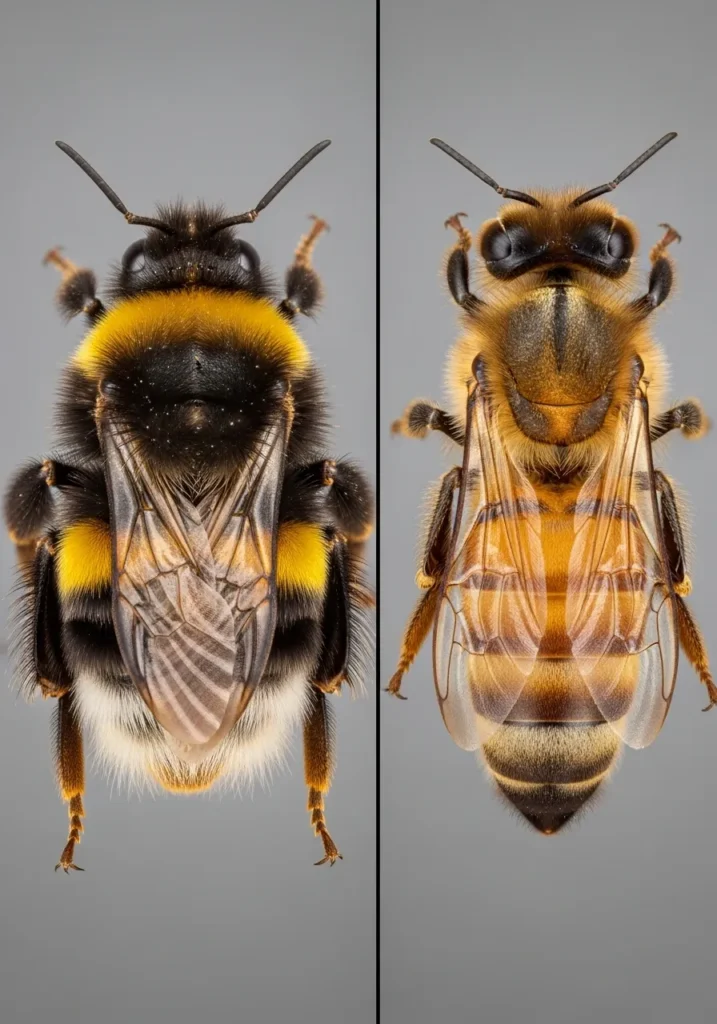
While both are social bees, fundamental differences distinguish them.
Colony Lifespan
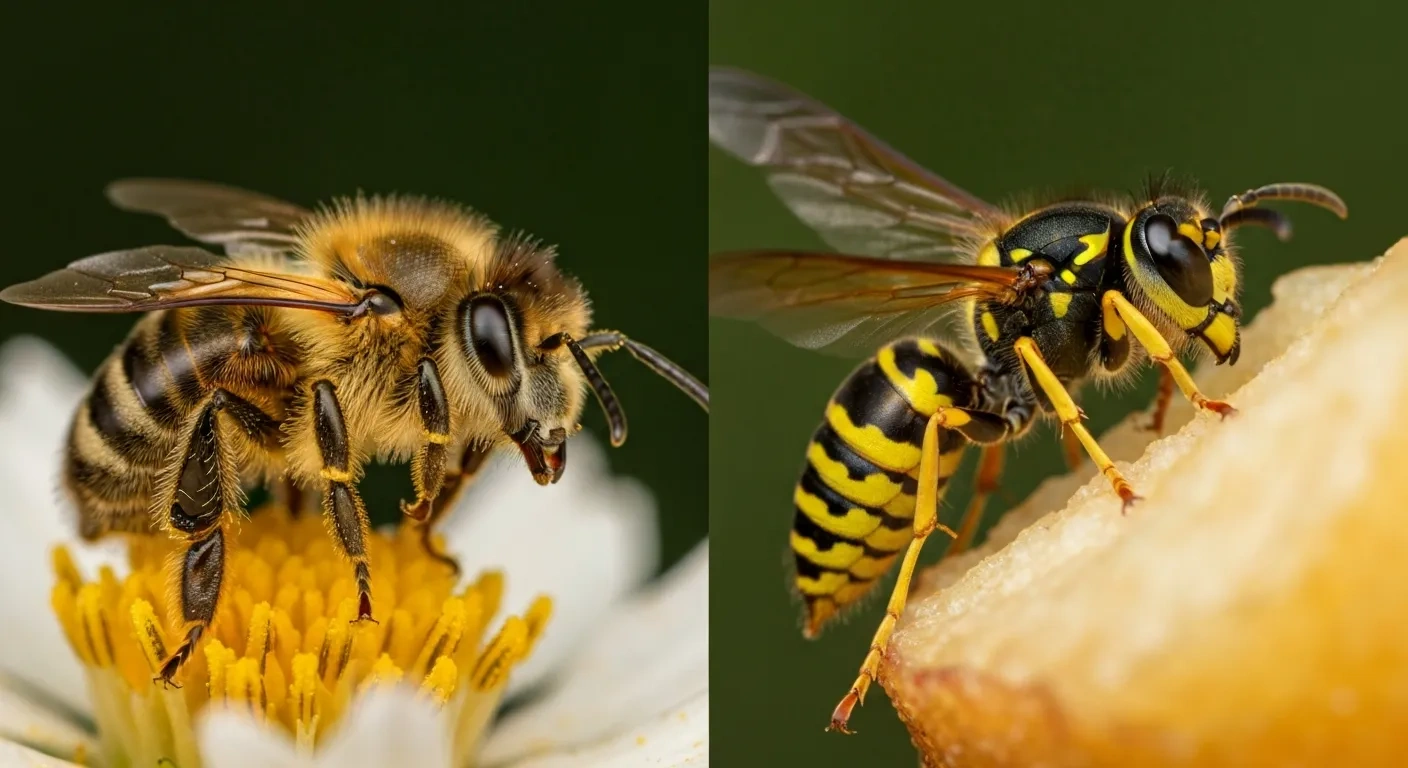
Honeybees: Perennial colonies surviving winters with thousands of workers clustered around their queen, who lives 2-5 years laying eggs year-round.
Bumblebees: Annual colonies where only the queen survives winter, hibernating alone while her colony dies. She rebuilds from scratch each spring, living approximately one year total.
Colony Size and Structure
Honeybee colonies contain 20,000-80,000 workers. Bumblebee colonies remain smaller at 50-400 workers, making them less productive for honey but more manageable.
Honeybees reproduce through swarming—half the colony leaves with the old queen. Bumblebee queens never swarm, instead producing new queens at season’s end who hibernate independently.
Nesting and Foraging
Honeybees build elaborate vertical wax combs. Bumblebees construct simpler horizontal cells in pre-existing cavities.
Bumblebees forage in cooler temperatures, dimmer light, and worse weather than honeybees, making them superior pollinators for early spring crops and northern climates. Their buzz pollination capability—vibrating flowers to release pollen—provides advantages honeybees cannot match.
Why Bumblebee Queens Matter for Ecosystems
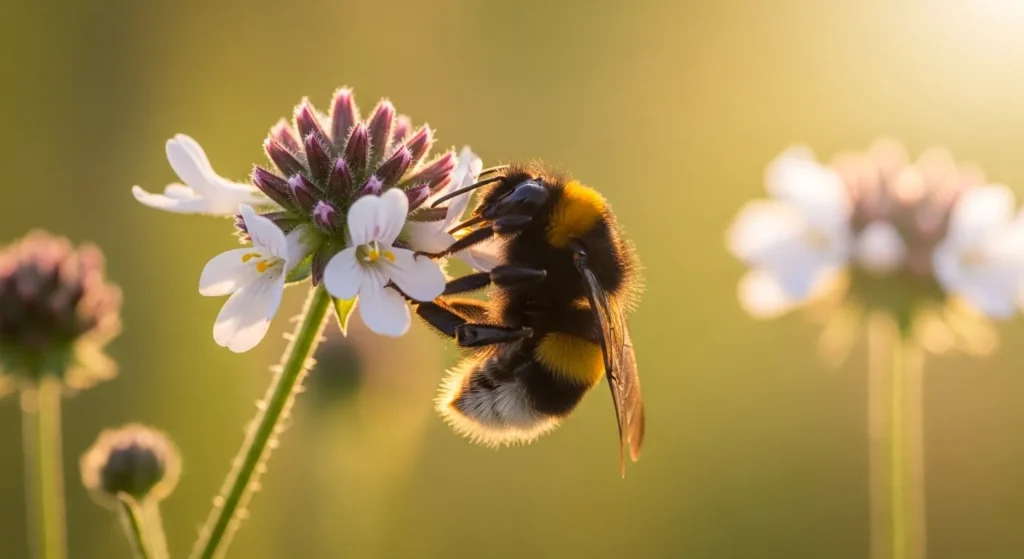
The ecological importance of bumblebee queens extends far beyond immediate pollination services.
Keystone Pollinator Status
Bumblebee queens function as keystone species whose impact far exceeds their biomass. By pollinating early-spring flowers before most other pollinators activate, queens enable seed production supporting entire food webs.
Their buzz pollination makes them irreplaceable for plant species other pollinators cannot effectively service, creating absolute dependencies. Without bumblebee queens, many wildflowers would experience reproductive failure, cascading through ecosystems.
Agricultural Value
Ecosystem services of bumblebees contribute billions of dollars annually to agriculture. Crops like tomatoes, blueberries, cranberries, peppers, and squash depend heavily on bumblebee pollination for optimal yields. Commercial greenhouse operations worldwide purchase bumblebee colonies specifically for their unique pollination capabilities.
Biodiversity Support
Beyond direct pollination, queens maintain biodiversity by supporting plant communities that provide food and habitat for countless organisms. Many plants evolved specialized relationships with specific bumblebee species, creating tight ecological dependencies that collapse when queens disappear.
Major Threats to Bumblebee Queens
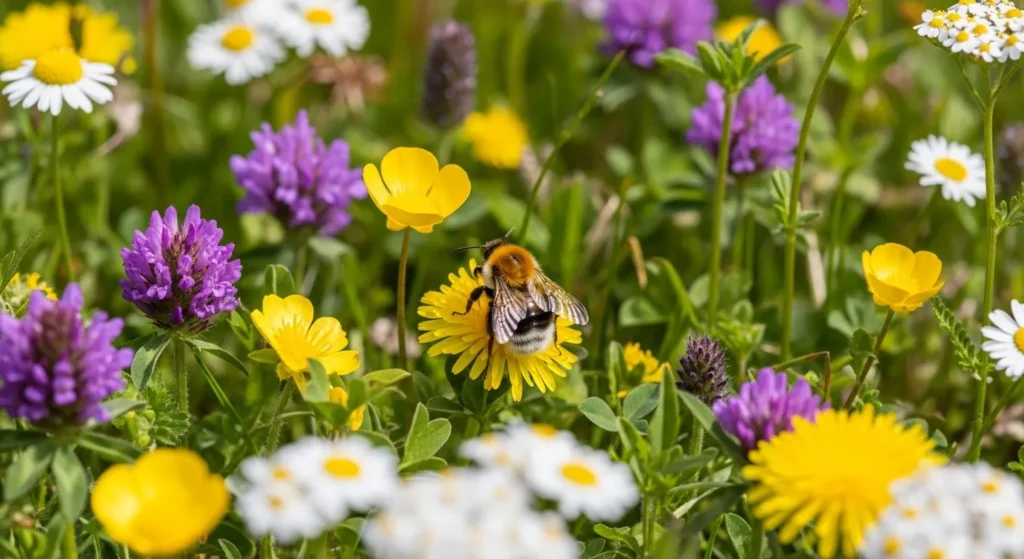
Pollinator decline represents one of the most serious conservation crises, with bumblebee queens experiencing particularly severe population reductions.
Pesticides and Neonicotinoids
Systemic insecticides called neonicotinoids persist in soil and plant tissues, exposing queens to chronic low-level poisoning. These neurotoxins impair navigation, learning, foraging efficiency, and reproduction even at sublethal doses.
Queens emerging from hibernation encounter contaminated flowers during critical nest-founding, when minor impairments cause colony failure. Research shows neonicotinoid exposure reduces queen hibernation survival by 26% and reproductive success by up to 85%.
Habitat Loss
Modern agriculture and urbanization fragment and eliminate diverse habitats queens require. Intensive monocultures provide brief floral abundance followed by resource deserts, failing to support complete colony cycles.
Queens need continuous floral resources from spring through autumn, plus undisturbed sites for nesting and hibernation. Meadow conversion, hedgerow removal, and development eliminate essential structural diversity. Even lawn management—frequent mowing and herbicides—destroys nesting sites and food sources.
Climate Change Impact on Pollinators
Climate change operates through multiple mechanisms. Shifting temperatures disrupt synchronized timing between queen emergence and flower availability. Queens emerging too early face starvation; late emergence shortens colony development, reducing reproduction.
Range contractions occur as climate zones shift faster than populations can migrate. Southern ranges become too hot while northern expansion faces dispersal constraints and fragmentation. Extreme weather—droughts, floods, unseasonable freezes—kills hibernating queens or destroys developing nests.
Disease and Extinction Risk
Pathogen spillover from commercial operations introduces diseases to wild populations. Multiple species face extinction, including the rusty patched bumblebee (declined 90%) and Franklin’s bumblebee (possibly extinct). Cumulative stressor impacts create synergistic effects more devastating than single threats, accelerating populations toward extinction tipping points.
What to Do If You Find a Bumblebee Queen
Encountering a bumblebee queen offers opportunities to support these pollinators.
Early Spring Queens
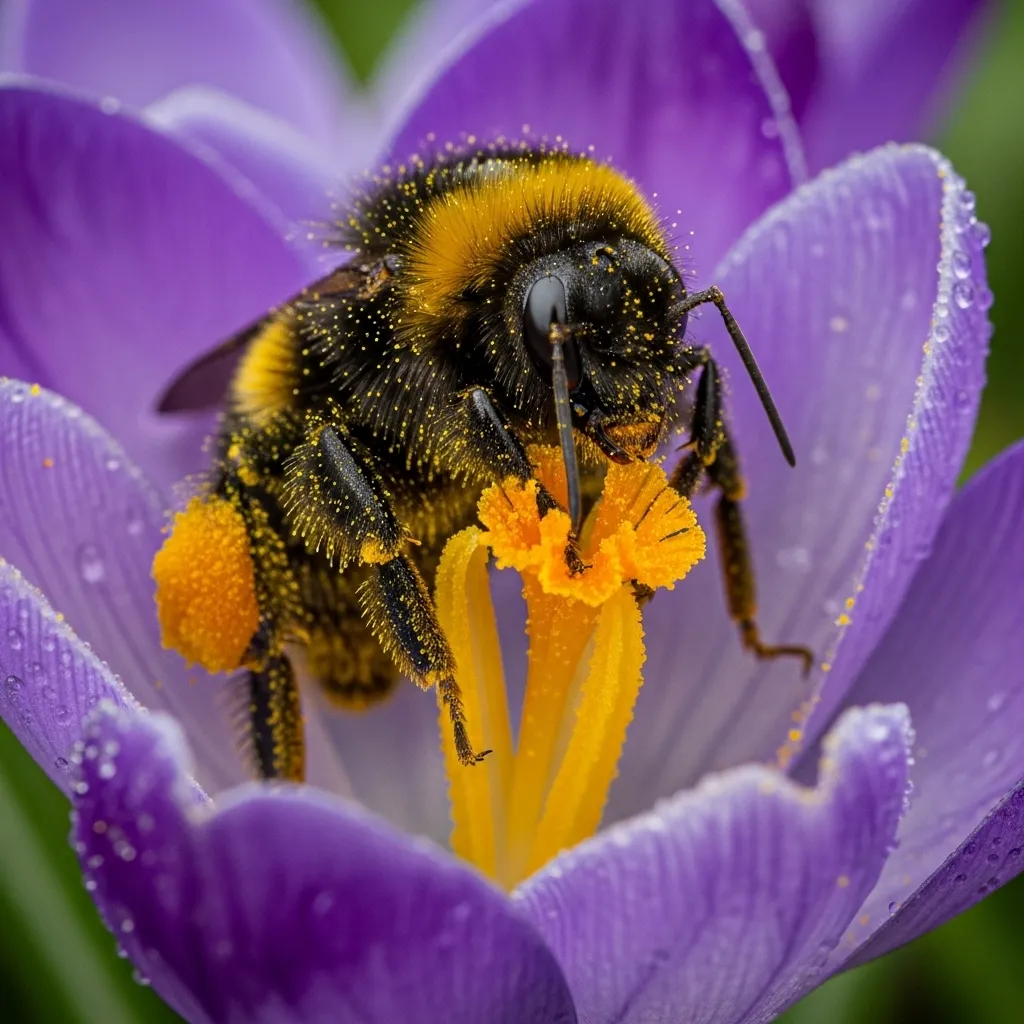
If you find a queen in early spring crawling or appearing lethargic, she may be exhausted from nest-searching.
Provide Energy: Mix 50:50 white sugar and water. Place a few drops on a spoon near (not on) the bee. If tired, she’ll drink and recover within minutes. Never force-feed or handle unnecessarily.
Leave Her Alone: If she appears healthy and investigates holes or flies low, she’s nest-searching. Give her space—don’t interfere.
Never Relocate: Moving queens disrupts nest-founding. If inconveniently located, wait patiently—she’ll move naturally.
Late Season Queens
Autumn queens seek hibernation sites and need undisturbed ground. Delay garden cleanup until late spring, as leaf litter and untilled soil edges provide crucial hibernation habitat. Avoid digging or tilling in autumn and winter that might destroy hibernating queens.
Conservation Actions You Can Take
Individual actions, multiplied across communities, can reverse population declines.
Plant Native Flowers
Establish diverse plantings blooming continuously from early spring through late autumn. Native plants for bumblebees best support local species through coevolution. Prioritize early bloomers like willow and crocus for spring queens, plus late-season asters and goldenrod for autumn reproduction.
Avoid “double-flowered” or “sterile” cultivars that lack accessible pollen and nectar despite showy appearances.
Eliminate Pesticides
Remove pesticide use from gardens and landscapes. Even “bee-safe” products harm bumblebees if misused. Support organic agriculture and advocate for stronger pesticide regulations protecting pollinators.
Provide Nesting Habitat
Leave undisturbed ground, brush piles, and native bunch grasses where queens can nest. Delay spring cleanup until late May, allowing overwintering queens to emerge naturally. Maintain habitat diversity with meadow areas, hedgerows, and varying vegetation structures.
Support Conservation
Donate to or volunteer with groups working on bumblebee conservation, habitat restoration, and research. Citizen science projects like Bumble Bee Watch contribute valuable population data. Contact legislators about pollinator-protective policies and pesticide restrictions.
Create Pollinator Corridors
Work with neighbors establishing connected habitat networks. Community gardens, parks, and roadside plantings contribute to pollinator corridors when properly managed with continuous bloom sequences.
Frequently Asked Questions
What does a queen bumblebee look like?
A queen bumblebee is significantly larger than workers (20-22mm vs 11-17mm), with a robust, round body covered in dense hair. Color patterns vary by species but typically show yellow, orange, or white bands on black. Early-season queens have worn, ragged wings from overwintering.
Does a queen bumblebee leave the nest?
Yes, during colony founding, queens frequently leave to forage, making dozens of daily trips. After workers emerge, queens reduce foraging and remain inside focusing on egg-laying while workers collect resources.
How big is a queen bumblebee?
Queen bumblebee size ranges from 20-22 millimeters in length, making them the largest colony individuals. This size accommodates fat reserves for hibernation and developed ovaries for egg production.
How long does a bumblebee queen live?
A bumblebee queen lives approximately one year from emergence to death. She emerges in spring, builds her colony over several months, produces new queens in late summer, then dies with the first hard frosts.
How many eggs does a queen bumblebee lay?
A healthy queen bumblebee lays 200-400 eggs throughout a colony season, though numbers vary by species and environmental conditions. She regulates production based on worker availability and food resources.
Where do bumblebee queens hibernate?
Bumblebee queens hibernate 5-10 centimeters underground in sheltered locations like abandoned rodent burrows, loose soil beneath tree roots, and north-facing slopes. They enter metabolic suppression, surviving months on stored fat reserves.
When do bumblebee queens emerge from hibernation?
Queens emerge when spring temperatures consistently reach 10-15°C, typically March through May depending on latitude. Emergence timing is triggered by soil temperature and day length, synchronized with early flower blooming.
Can a bumblebee queen sting you?
Yes, bumblebee queens can sting repeatedly with smooth stingers, unlike honeybees. However, they’re generally docile and sting only when directly threatened or defending nests. Stings cause temporary pain and swelling but are rarely serious.
What’s the difference between a bumblebee queen and a worker?
Queens are larger (20-22mm vs 11-17mm), live longer (one year vs 2-6 weeks), and can reproduce. Workers are sterile females focusing on foraging, nest maintenance, and brood care. Queens have greater fat reserves for overwintering.
How can I help bumblebee queens?
Plant native flowers blooming spring through autumn, eliminate pesticides, leave undisturbed ground for nesting and hibernation, delay spring cleanup until late May, and support conservation organizations. These actions create habitats supporting queen survival and reproduction.
Conclusion
The bumblebee queen stands at the intersection of individual resilience and ecological necessity. Her solitary spring emergence, determined nest founding, and tireless colony building represent one of nature’s most remarkable reproductive strategies. Yet these extraordinary organisms face unprecedented threats from habitat degradation, toxic pesticides, and climate instability.
Pollinator decline accelerates globally, with bumblebee species disappearing from regions they’ve occupied for millennia. The rusty patched bumblebee, once abundant across eastern North America, now survives in scattered remnants. Franklin’s bumblebee may be extinct. These losses represent not just species extinctions but the unraveling of ecological relationships supporting entire ecosystems.
Understanding what a bumblebee queen does, how she lives, and why she matters illuminates our deep connections to the natural world. Every tomato, blueberry, and wildflower depends on pollinators like these, making their conservation fundamental for sustaining ecosystems that support all life.
The solutions exist and remain accessible: reduce pesticide use, restore diverse habitats, support organic agriculture, and create pollinator-friendly spaces in every garden and community. Each action contributes to a future where bumblebee queens continue their ancient rhythms, emerging each spring to build colonies, pollinate flowers, and weave the ecological tapestries that make our world vibrant and alive.
The fate of bumblebee queens rests in human hands. We possess the knowledge and tools to reverse population declines, restore degraded habitats, and eliminate the most harmful threats. What remains is collective will to act—to value these insects as living threads in the ecological fabric sustaining our planet.
Choose to be part of their salvation. Plant native flowers. Protect wild spaces. Advocate for pollinator-friendly policies. Together, these actions create a world where spring will always bring the hopeful buzz of queens emerging from winter’s darkness, ready to perform their irreplaceable ecological role.