The difference between bee and wasp is one of the most commonly Googled insect questions — and for good reason. Misidentifying these insects can mean the difference between calmly walking away and accidentally provoking a very angry colony. Whether you’re a gardener, a beekeeper, or just someone who panicked at a picnic, this guide breaks everything down clearly.
Table of Contents
At a Glance: Bee vs. Wasp Comparison Table

Physical Appearance: How to Tell Them Apart Instantly
The single fastest way to answer the classic bee or wasp debate is to look at the body. Once you know what to look for, you’ll never mix them up again.

The “Fuzz” Factor
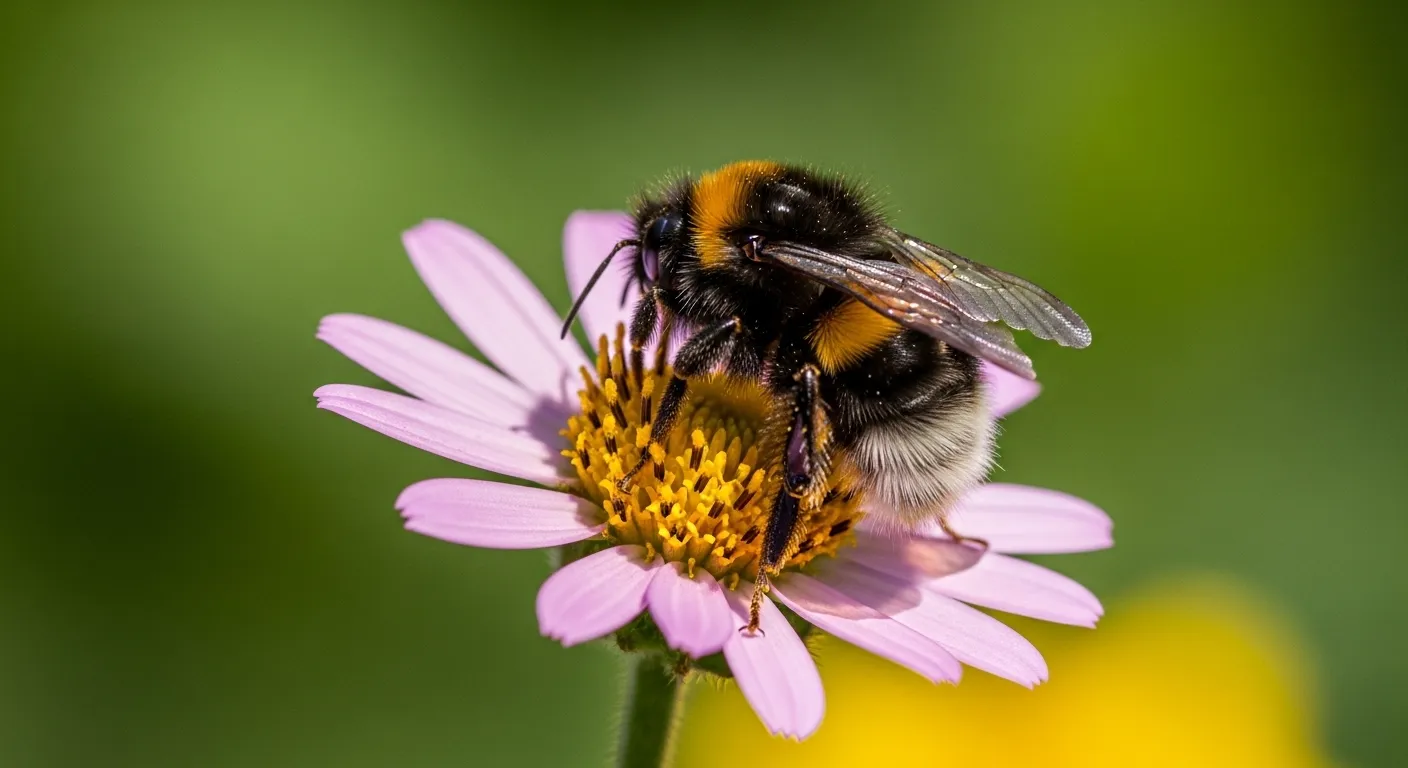
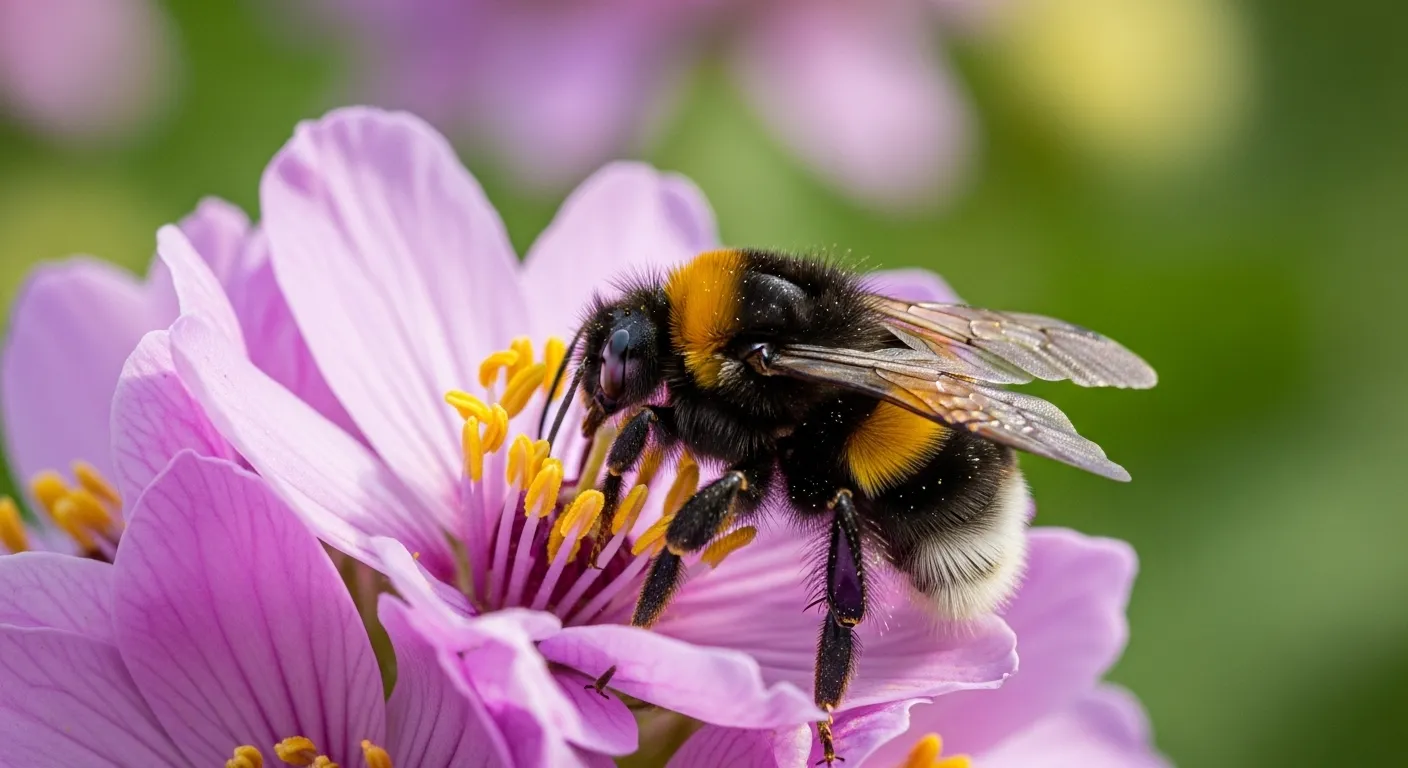
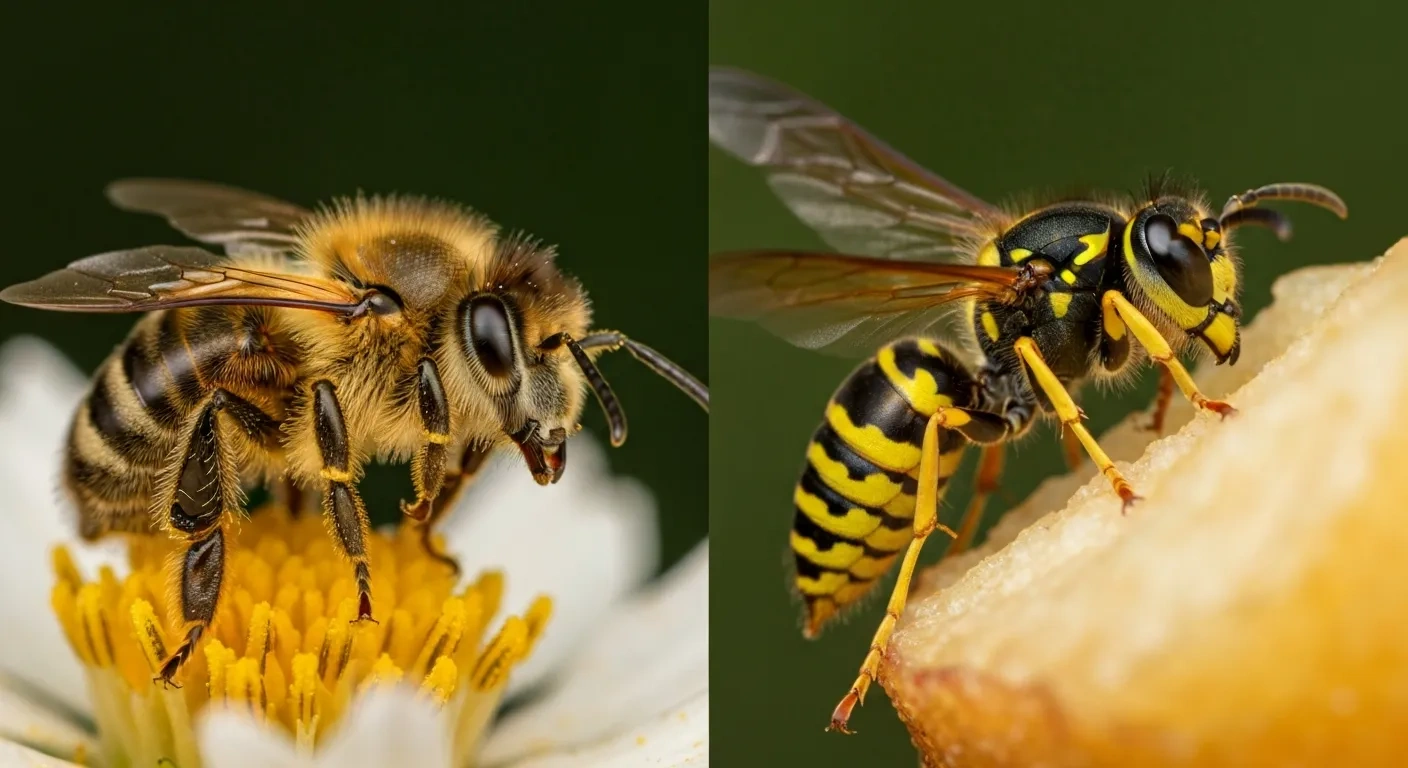
Bees evolved their characteristic hairiness for a very practical reason: pollen collection. Those tiny, branched hairs — called plumose setae — act like velcro for pollen grains, allowing bees to carry enormous loads back to the hive. Wasps, being hunters rather than foragers, have no need for this. Their smooth, aerodynamic bodies are optimized for speed and agility when pursuing prey.
Body Shape & Legs
The most reliable “wasp vs bee” field identifier is the waist. Bees have a broad, connected thorax and abdomen — they look stocky and robust. Wasps have a dramatically pinched petiole (that iconic narrow waist), giving them an almost architectural elegance. Their legs are also slender and cylindrical, while a bee’s back legs are noticeably flattened and often visibly loaded with pollen.
“If it looks like it’s wearing tiny yellow saddlebags on its hind legs, it’s a bee. If its waist looks pinched, it’s almost certainly a wasp.”
Diet and Ecological Roles: Pollinators vs. Predators
What Do Bees Eat?
Bees are strict vegetarians. Adult bees consume nectar as their primary energy source, while larvae are fed a protein-rich paste of pollen. This floral dependence is why bees are so vital — they’re essentially co-evolved with flowering plants. Every time a bee visits a flower for food, it transfers pollen, enabling plant reproduction. In the context of bees and wasps as ecological forces, bees are unquestionably the backbone of terrestrial ecosystems.
What Do Wasps Eat?
Here’s where the bee vs wasp comparison gets interesting. Wasps are primarily predatory carnivores. They hunt caterpillars, flies, aphids, and other insects to feed their larvae. This makes them remarkably effective — and free — pest controllers for your garden. Adult wasps also drink nectar for their own energy, which means they contribute a small amount of pollination too.
Ecosystem Insight
Wasps get a bad reputation, but a colony of yellow jackets can eliminate thousands of crop-damaging caterpillars and flies in a single season. Before reaching for the spray, consider: is this nest actually causing problems, or doing your garden a service?
Nests and Habitats: Where Do They Live?
Bee Habitats
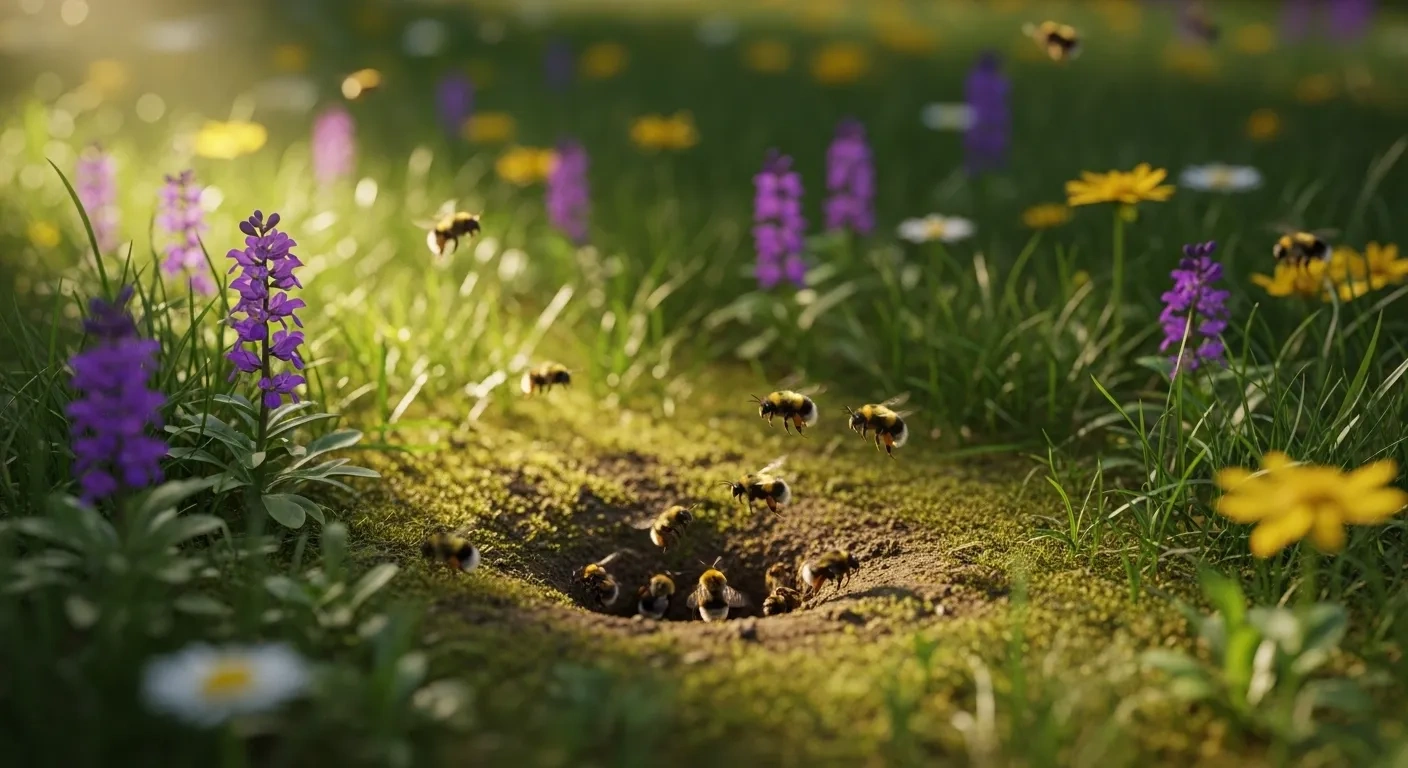
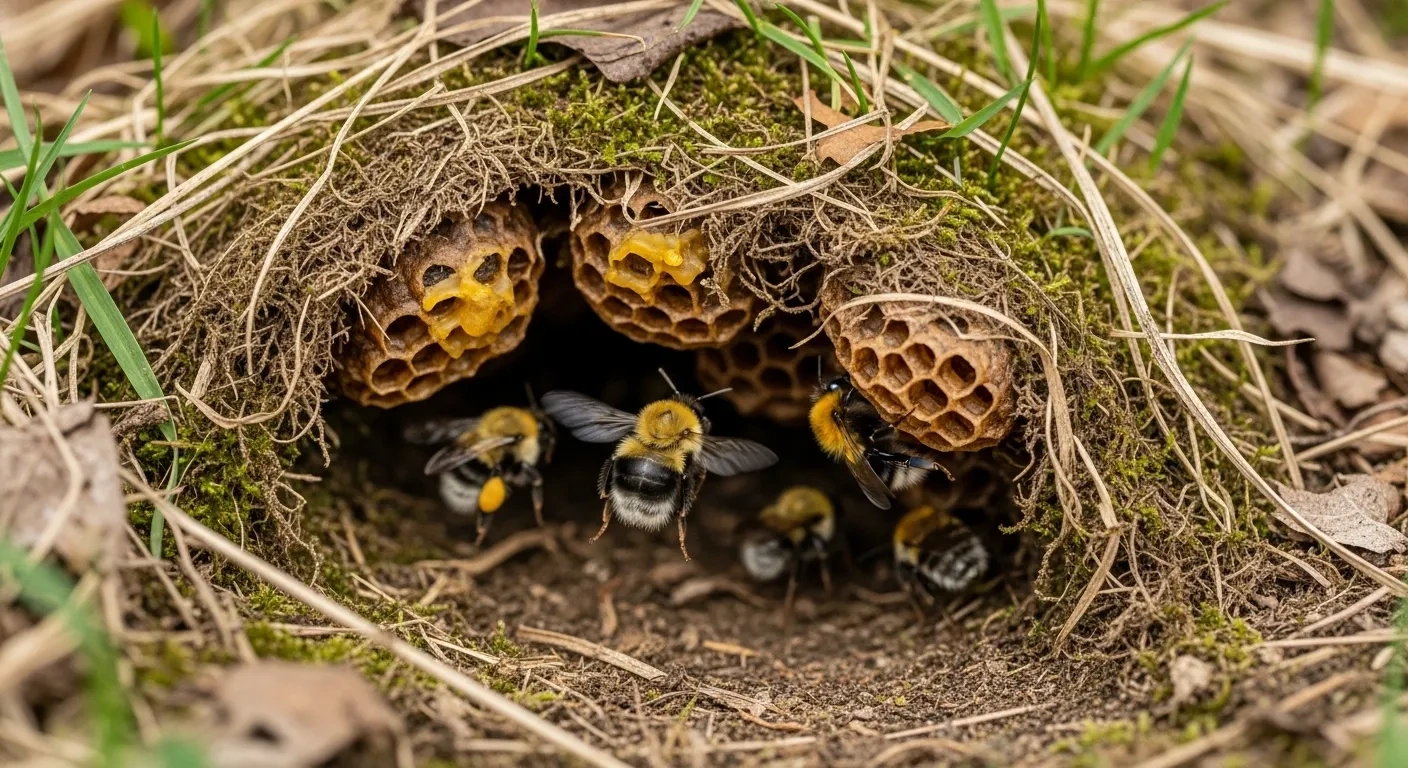
The architecture of bee nests varies dramatically by species. Honeybees construct remarkably precise hexagonal wax combs inside tree cavities or man-made hives. Bumblebees — a particular focus for those of us in bumblebee beekeeping — often nest underground in abandoned rodent burrows, lining chambers with wax and fibrous plant material. Carpenter bees drill perfectly circular holes into untreated wood to create egg galleries, which often alarms homeowners who mistake them for destructive pests.
Wasp Nests
Wasp nests are engineering marvels of a different kind. Workers chew raw wood fibers and mix them with saliva to produce a papery, layered material. You’ll find these grey, papery structures under roof eaves, in attic spaces, and hanging from tree branches. Yellow jackets — the most commonly misidentified species in the bee or wasp debate — frequently build underground nests that can house thousands of individuals by late summer.
Stings, Aggression, and Safety
Why Do They Sting?
Both bees and wasps sting defensively — to protect their nest and queen. The crucial difference is in disposition. Bees foraging away from their hive are almost universally non-aggressive; they’re focused on collecting food, not fighting. Wasps, particularly in late summer when colonies are large and food sources dwindle, become noticeably more defensive and prone to stinging with little provocation.
The Anatomy of a Sting
This is the most clinically important difference between bees and wasps. A honeybee’s stinger is barbed. When it drives into mammalian skin, the barb anchors in place — and when the bee pulls away, the stinger, venom sac, and part of the bee’s abdomen are ripped free, killing the bee. The detached venom sac continues to pump venom for up to a minute, so removing it quickly (scraping sideways with a fingernail, not squeezing) minimizes the dose.
A wasp’s stinger is smooth and unbarbed. The wasp can withdraw it cleanly, sting again, and again. This is why disturbing a wasp nest produces such an intense defensive response — each individual is capable of multiple stings.
What to Do If You Find a Nest
| Leave it alone if… | Call a professional if… |
| It’s in a low-traffic area of the garden | The nest is inside your home’s walls or attic |
| It’s a small, early-season nest | Anyone nearby has a venom allergy |
| It’s a bumblebee ground nest (endangered species!) | It’s a large yellow jacket underground nest |
| No one in the household has a bee/wasp allergy | The nest is near a door or high-traffic pathway |
Real-World “Mistaken Identity” Scenarios
Scenario 1
“There are insects buzzing around my picnic trash can. Are they bees?”
Almost certainly not. Bees have zero interest in meat, sugary drinks, or rubbish. They’re after floral resources. Those picnic crashers are almost certainly yellow jacket wasps or common wasps scavenging for protein and sugar. The giveaway: a smooth, shiny body and aggressive, darting flight pattern. Bees tend to fly in a more deliberate, purposeful path toward flowers.
Scenario 2
“There’s a large, scary insect hovering near my wooden deck — is it a hornet?”
Very likely a Carpenter bee — one of the most misidentified insects in the wasp vs bee vs hornet debate. They’re large, robust, and intimidating. However, male Carpenter bees (the ones that hover aggressively near territory) have no stinger at all. Females do but rarely sting unless directly handled. The giveaway: a shiny, hairless abdomen (bumblebees are uniformly fuzzy). Enjoy the show — they’re mostly harmless and excellent pollinators.
Also worth knowing: Bee vs. Wasp vs. Hornet
The difference between wasp and hornet is largely one of size and species. Hornets are simply large wasps — members of the genus Vespa. European Hornets and Bald-Faced Hornets are the most common in the UK and North America respectively. They build the same papery nests, deliver more venom per sting, but are generally less aggressive than yellow jackets unless their nest is disturbed.
Can You Tell the Difference? Quick Quiz
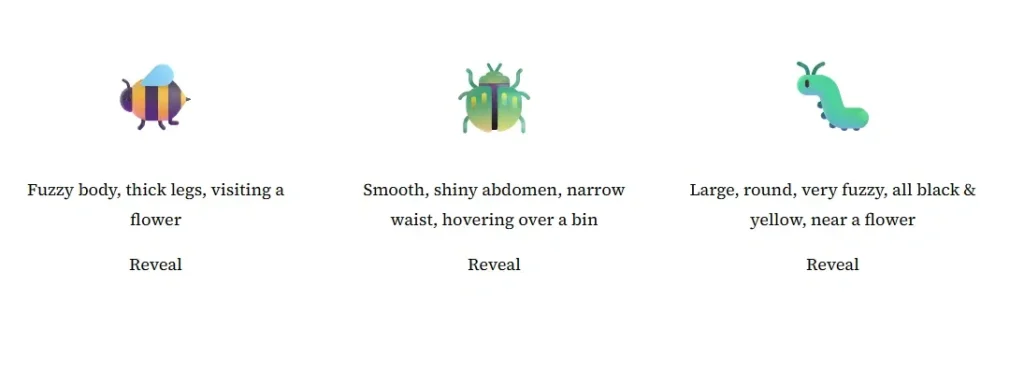
Put your new knowledge to the test. Click to reveal the answer for each insect below.
The Bottom Line
The difference between bee and wasp isn’t just academic — it has real implications for how you respond when you encounter one. Bees are docile, vital pollinators worthy of our protection. Wasps are misunderstood predators that provide genuine pest control benefits. Both deserve respect rather than panic.
For bumblebee beekeepers in particular, fostering an appreciation for all stinging insects in your community helps create a safer, more ecologically literate neighbourhood around your colonies. The more people can accurately identify a bumblebee vs a wasp, the less likely they are to disturb or destroy a nest that’s actually doing tremendous ecological work.
Want to go deeper? Explore our guides on bumblebee nest identification, seasonal colony behaviour, and how to set up your first bumblebee habitat.