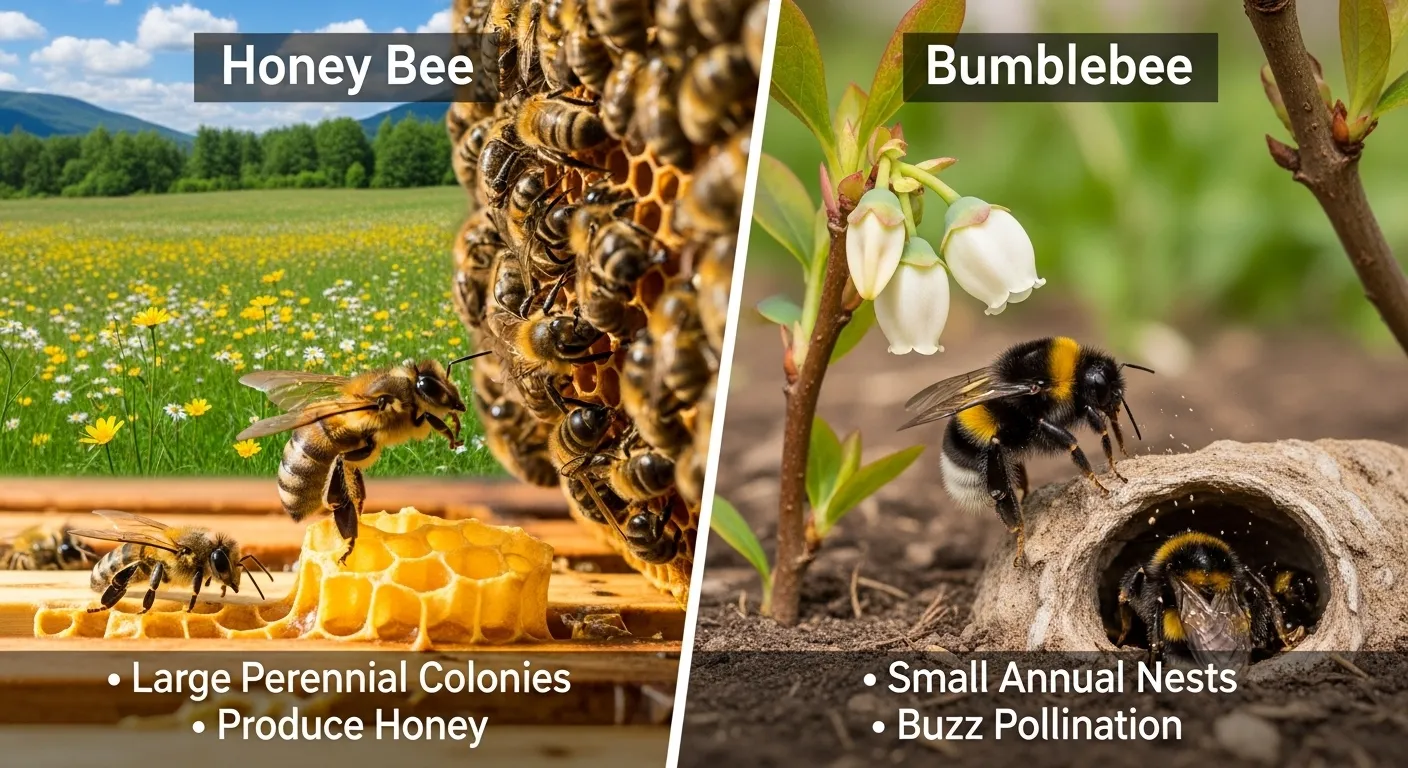
When you spot a fuzzy insect buzzing from flower to flower in your garden, do you know whether you’re watching a honey bee or a bumblebee? While both species are vital pollinators that sustain our food systems and natural ecosystems, the honey bee vs bumblebee comparison reveals fascinating differences in behavior, biology, and environmental impact. Understanding these distinctions helps us appreciate the incredible biodiversity within the bee world and underscores why protecting both species is critical for agriculture, wild plant reproduction, and planetary health. In this comprehensive guide, we’ll explore the amazing pollination differences between these essential insects and discover why both deserve our attention and conservation efforts.
Table of Contents
Physical Appearance and Identification
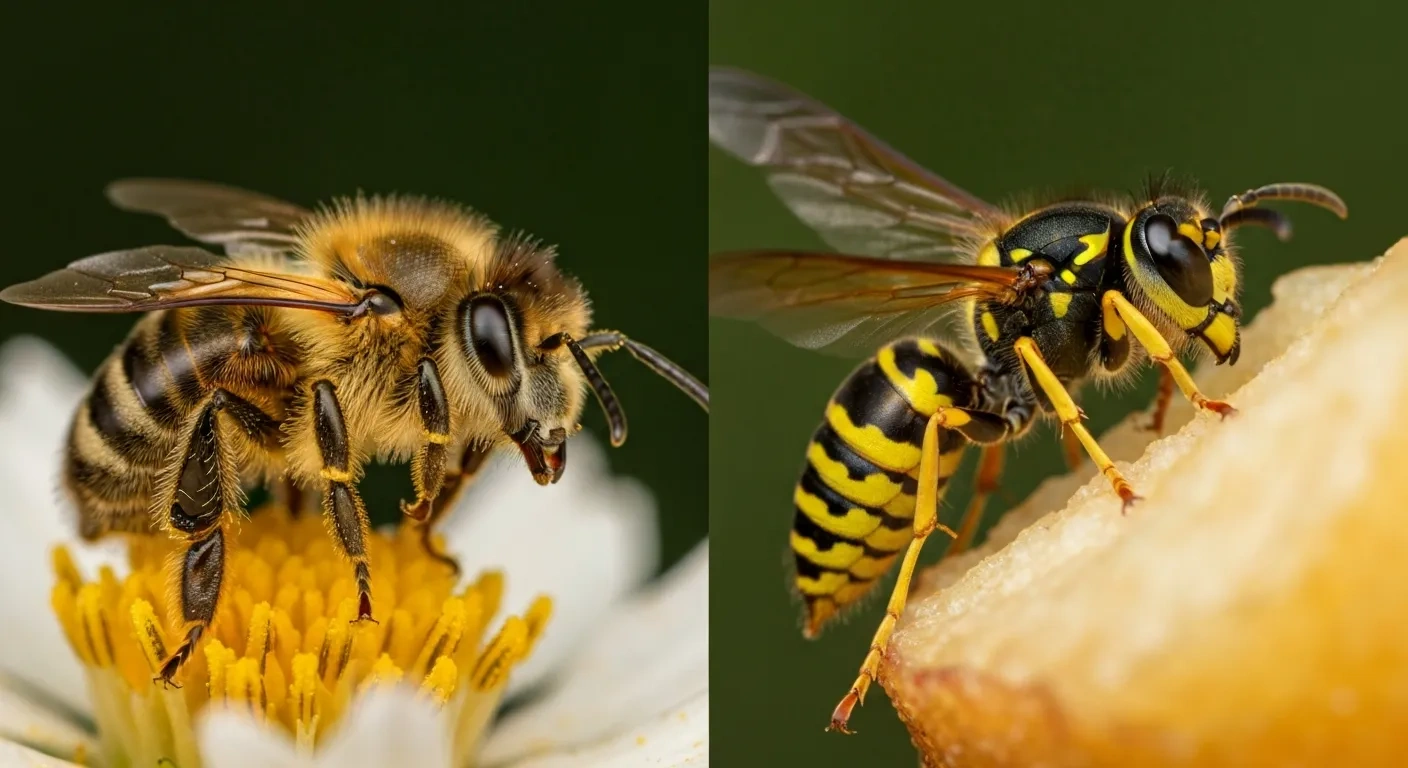
The difference between honey bee and bumblebee starts with their distinctive physical characteristics. Honey bees (Apis mellifera) typically measure 12-15 millimeters in length and display a slender, streamlined body with amber and black stripes. Their coloration leans toward golden-brown, and their bodies appear relatively smooth with less pronounced hair coverage.
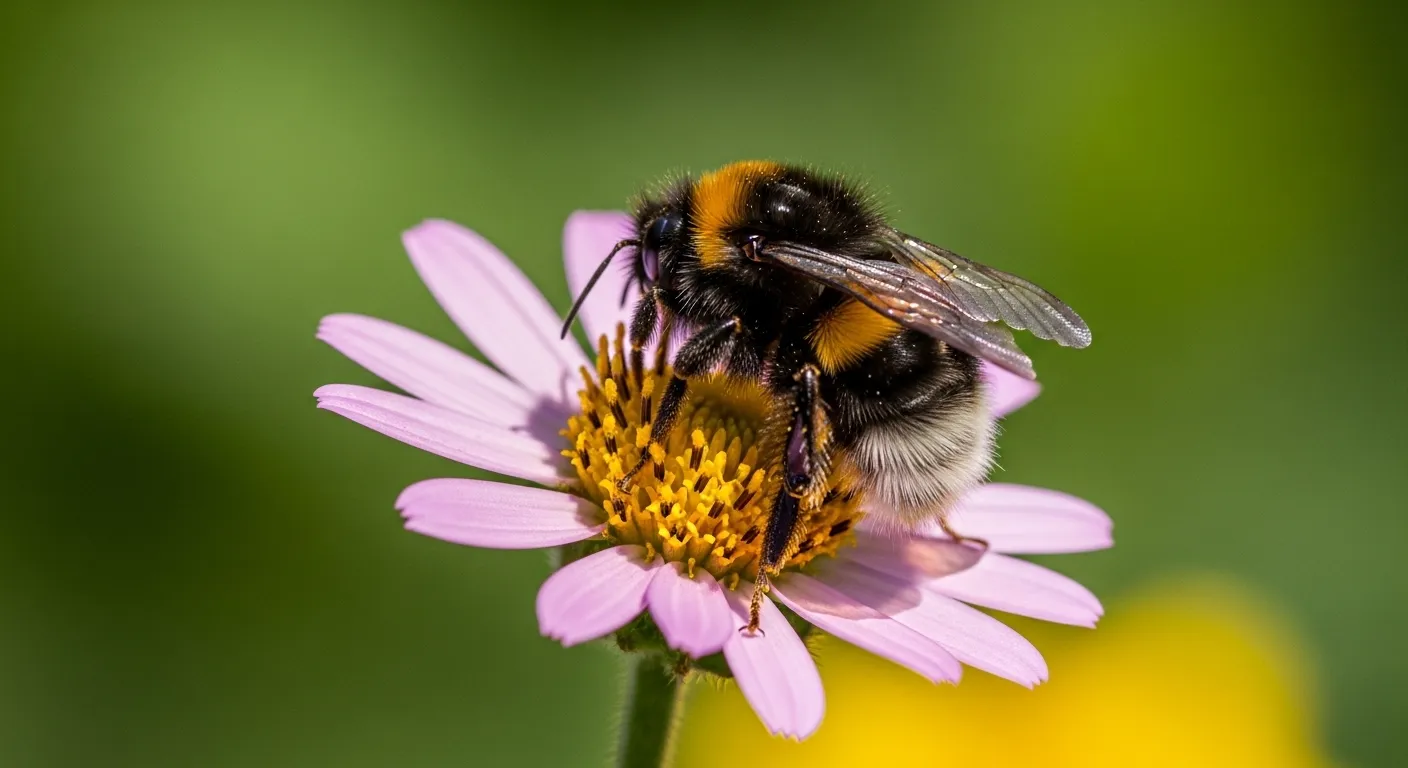
Bumblebees (Bombus species) are considerably larger and more robust, measuring 15-25 millimeters depending on the species. Their most striking feature is their dense, fuzzy coat of hair covering their entire body, giving them a plump, teddy-bear-like appearance. Most bumblebee species display bold yellow and black bands, though some showcase orange, red, or white markings. This thick pile of hair serves a crucial thermoregulatory function, allowing bumblebees to maintain body temperature in cooler conditions.
Beyond size and fuzziness, several other features distinguish these pollinators. Honey bees have smaller, more delicate wings and appear elongated and aerodynamic, whereas bumblebees possess proportionally larger wings that create their characteristic loud buzzing sound. Honey bees fly in a quick, direct manner between flowers, while bumblebees exhibit a slower, more hovering flight pattern. Both species have specialized pollen baskets (corbiculae) on their hind legs, but bumblebees’ are generally larger and more visible when loaded with pollen.
Hive vs Nest: Colony Structure and Social Behavior
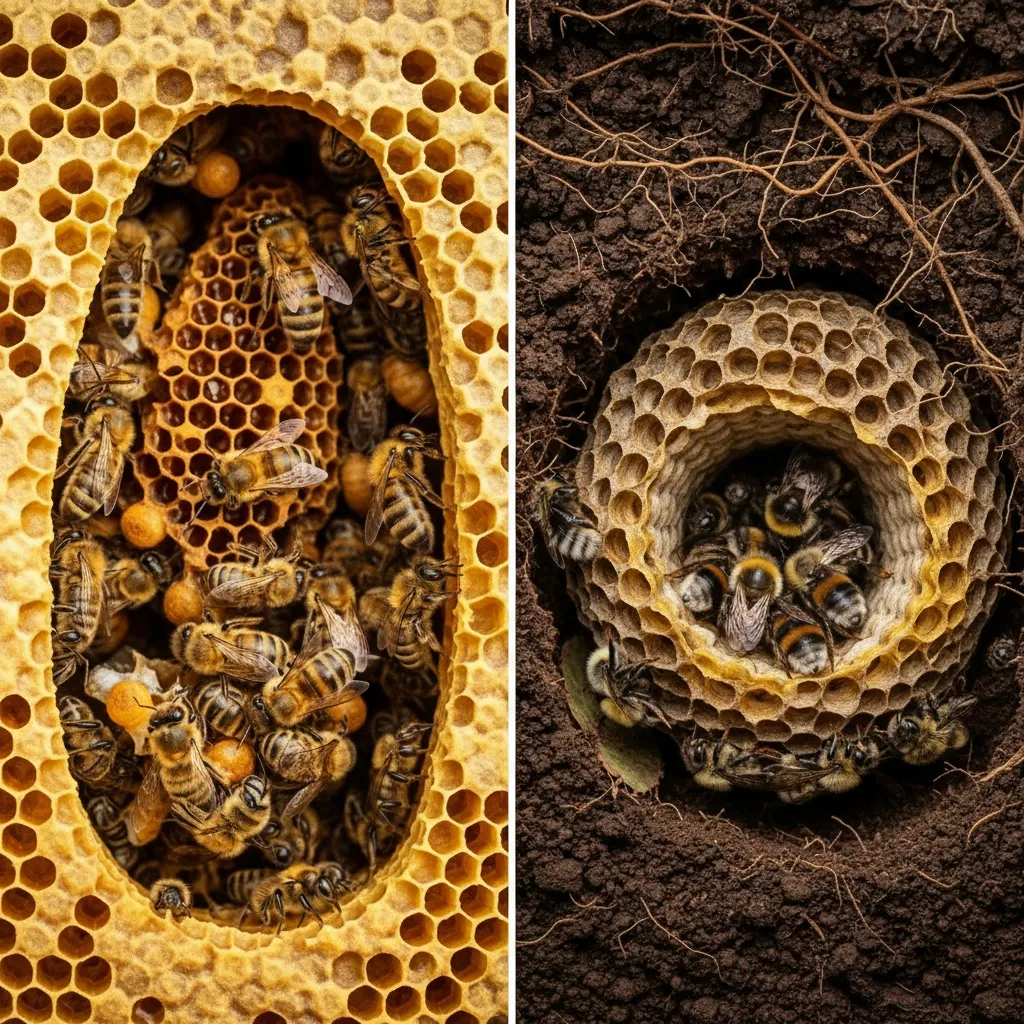
The contrast in bee colony structure reveals dramatically different social organizations. Honey bees create permanent, highly sophisticated colonies housing 20,000 to 80,000 individuals during peak summer. Their architectural marvel—the honeycomb—consists of precise hexagonal wax cells serving as brood chambers, honey storage, and pollen repositories. These perennial colonies survive for years, with workers maintaining the hive through winter by clustering together and generating warmth through muscle vibrations.
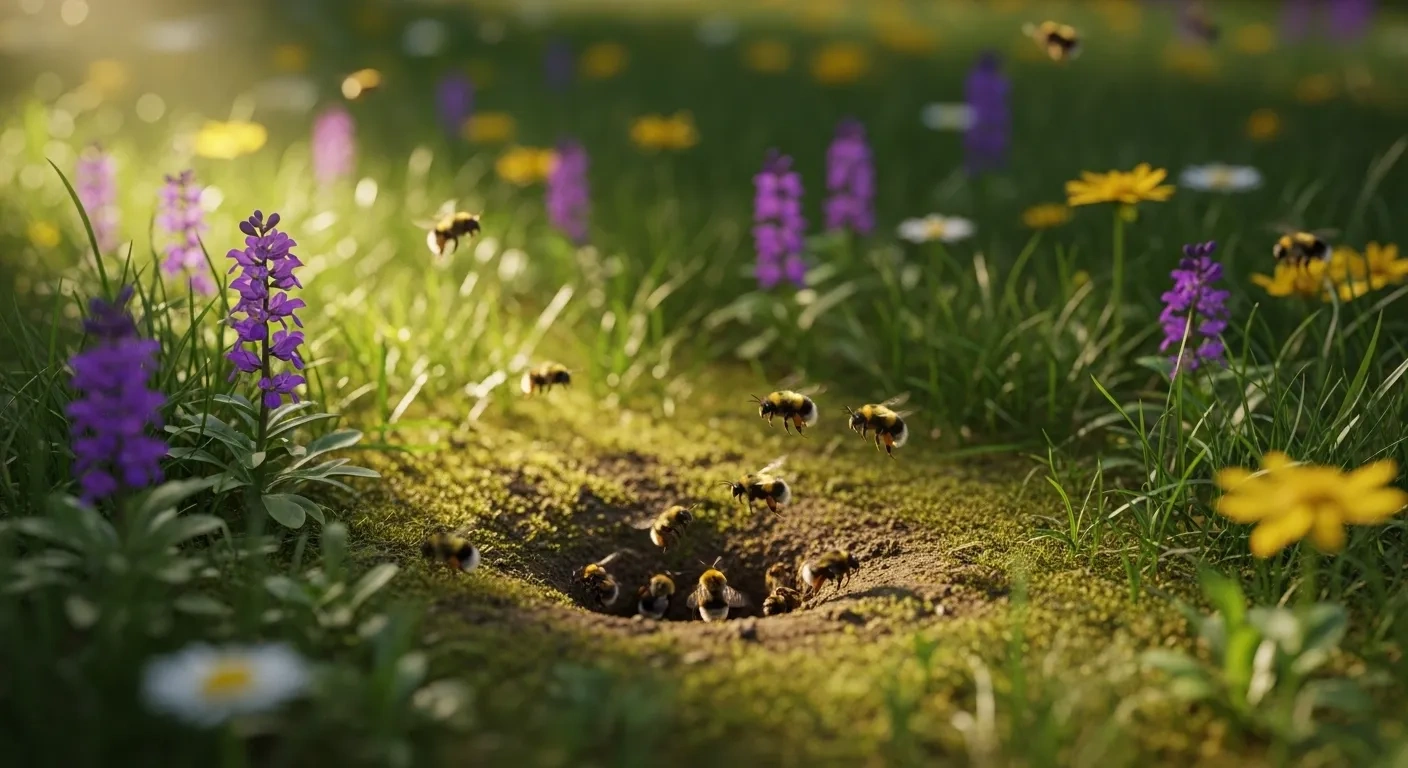
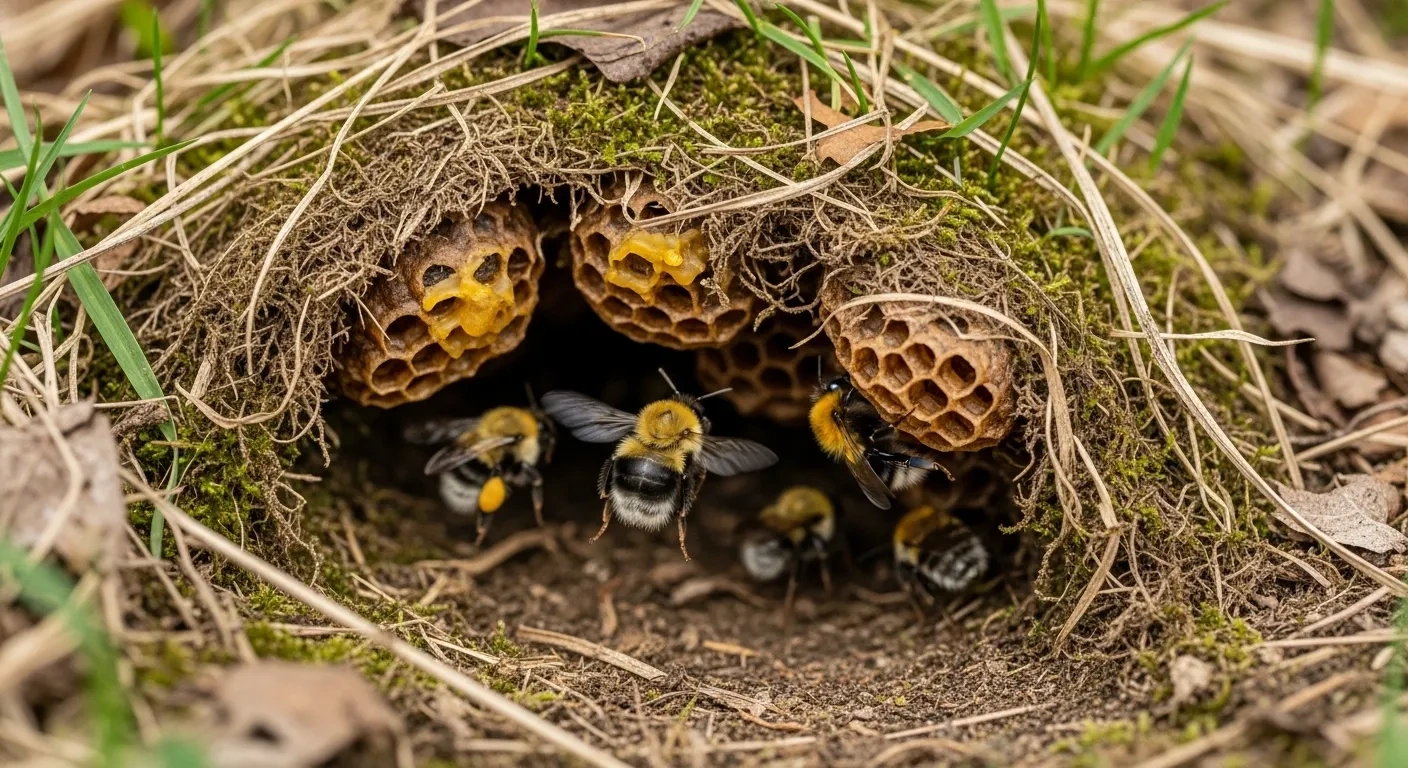
Bumblebee nest vs honey bee hive architecture differs fundamentally. Bumblebees establish annual colonies in abandoned rodent burrows, under garden sheds, in compost heaps, or within thick grass. Their nests house only 50 to 400 individuals at peak season. Rather than elaborate wax combs, bumblebees create irregular wax cells and pollen pots. These colonies exist for only one season, with only fertilized queens surviving winter.
The social insects and worker bees hierarchy also varies significantly. Honey bee colonies maintain a strict caste system with one queen, hundreds of drones, and tens of thousands of female workers performing age-specific tasks. A queen bee vs bumblebee queen comparison shows that bumblebee queens personally initiate the colony, collecting pollen and nectar, building cells, and raising the initial brood entirely alone—a task honey bee queens never perform. As the bumblebee colony grows, workers assume foraging duties, but role assignments remain more flexible than in honey bee societies.
Honey bees perform the famous “waggle dance”—a sophisticated figure-eight movement communicating distance, direction, and quality of food sources. Bumblebees lack this complex language, relying on simpler pheromone trails and direct communication.
Amazing Pollination Differences and Efficiency
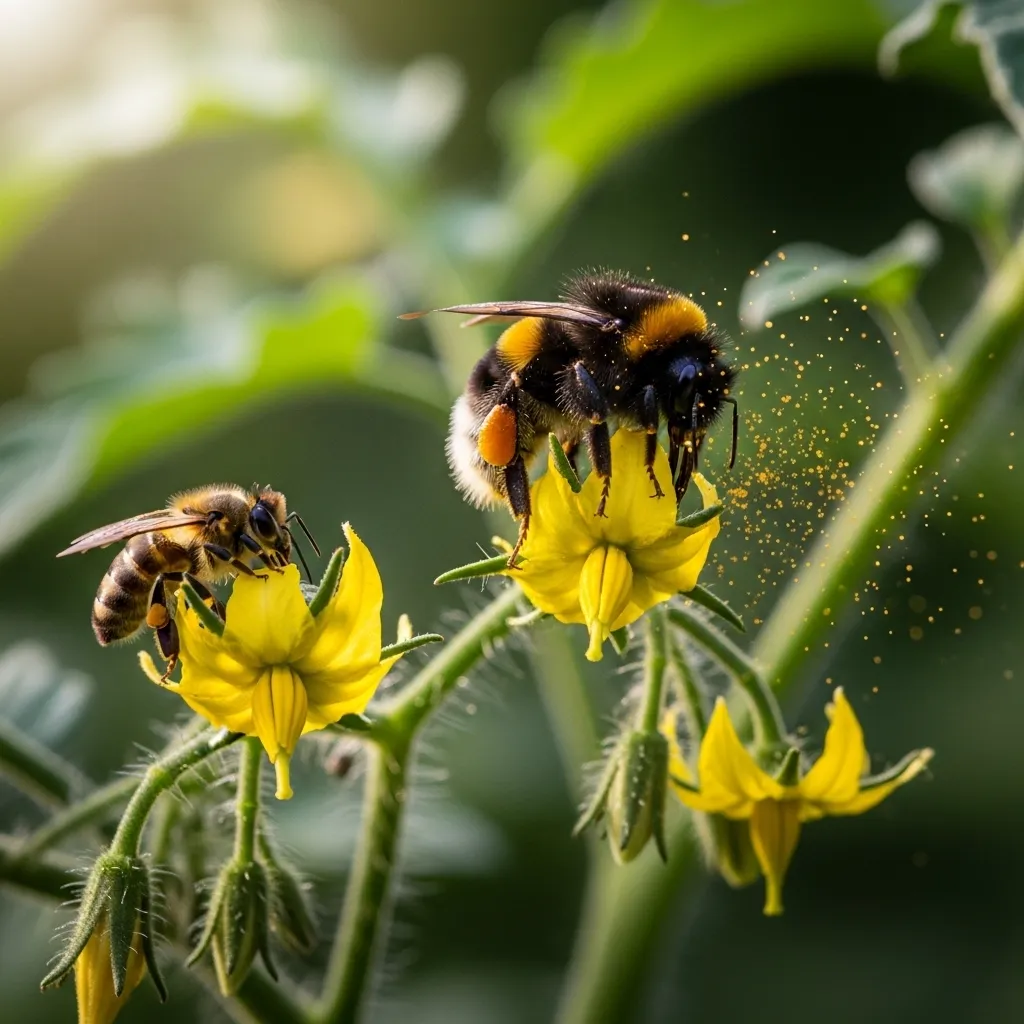
The remarkable pollination by bees showcases distinct techniques that make honey bees and bumblebees complementary pollinators. Bumblebees excel at “buzz pollination” (sonication), where they grasp a flower and rapidly vibrate their flight muscles at 400 Hz or higher without flying. This vigorous shaking releases pollen from flowers with tube-shaped anthers—particularly tomatoes, blueberries, cranberries, peppers, and eggplants. Honey bees cannot perform this technique, making bumblebees irreplaceable for these crops.
Honey bees vs bumble bees pollination efficiency varies by environmental conditions. Honey bees demonstrate remarkable flower constancy, visiting the same plant species during individual foraging trips. This behavior increases pollination effectiveness and makes honey bees excellent for crop monocultures like almonds. Their large colony sizes provide massive workforce numbers, with a single hive potentially making millions of flower visits daily.
However, bumblebees possess several pollination advantages:
Temperature tolerance: Bumblebees forage in temperatures as low as 40°F (4°C) and in rainy or overcast conditions when honey bees remain in their hives. Their dense hair coat and ability to generate body heat allow them to work when other pollinators cannot.
Extended foraging hours: Bumblebees begin foraging earlier in the morning and continue later into the evening, maximizing pollination windows.
Pollen transfer efficiency: Individual bumblebees often deposit more pollen per flower visit than honey bees due to their larger bodies, hairier coats, and more vigorous flower handling.
Wild flower specialization: As wild pollinators, bumblebees visit a broader diversity of wildflowers, including those with deep or complex blossoms. Their longer tongues (up to 20mm versus honey bees’ 6-7mm) allow access to deeper nectar sources.
Nectar and pollen collection behaviors also differ. Honey bees collect massive quantities to stock their perennial hives for winter, often removing more resources than needed immediately. Bumblebees gather only what their small, seasonal colonies require, leaving more resources for other pollinator species.
Research demonstrates that crop yields increase most dramatically when both honey bees and bumblebees are present, as their different pollination styles create comprehensive coverage that neither achieves alone.
Honey Production: Do Bumblebees Make Honey?
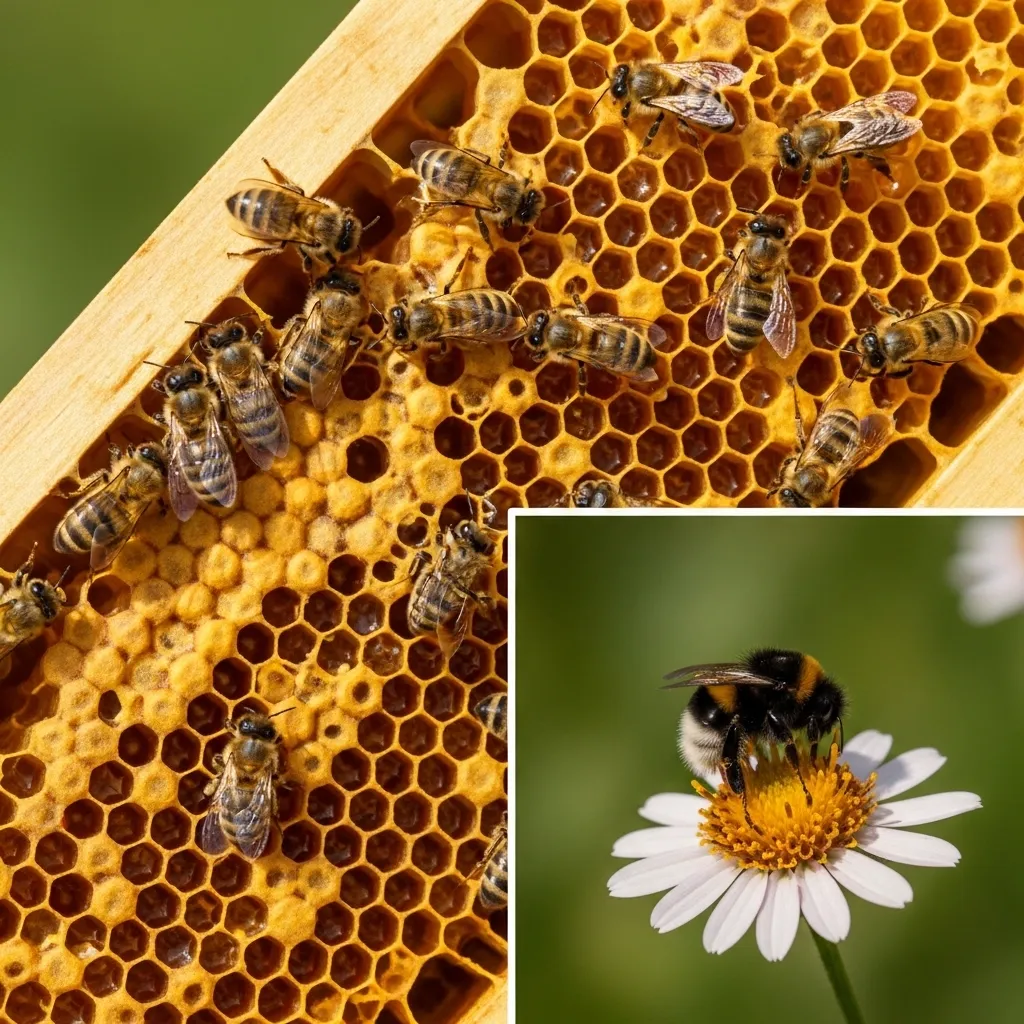
One of the most common questions is: do bumblebees make honey? The short answer is yes, but with crucial distinctions. Bumblebees produce honey-like nectar stores in small wax pots within their nests. However, these stores are minimal—typically just enough to feed the colony for a few days during poor weather. A thriving bumblebee colony might produce only a few grams of honey throughout an entire season.
Honey bees are nature’s most prolific honey producers. A healthy honey bee colony stores 30-60 pounds of honey to survive winter, with strong colonies producing 60-100 pounds of surplus honey that beekeepers can harvest. This remarkable productivity stems from their perennial colony structure, massive workforce, and evolutionary adaptations for long-term food preservation.
The honey production process differs in sophistication. Honey bees add specialized enzymes to nectar, reducing its water content from about 70% to below 18%, creating a stable, antimicrobial food source that can last years. Bumblebees produce simpler nectar stores with higher water content that would spoil quickly, reflecting their short-term storage needs.
From an agricultural perspective, honey production provides economic incentive for beekeepers to maintain large honey bee populations. However, this incentive doesn’t exist for bumblebee conservation, making their protection more dependent on environmental awareness and habitat preservation.
Sting Behavior, Temperament, and Safety
Understanding the question “are bumblebees aggressive?” requires examining both species’ defensive behaviors. Bumblebees are remarkably docile and rarely sting unless directly threatened or their nest is disturbed. They can be gently moved off flowers by hand without stinging. Female bumblebees possess smooth stingers that can be withdrawn and used multiple times, but they exercise this capability infrequently. Male bumblebees cannot sting at all.
Honey bees are generally gentle away from their hives, readily tolerating humans observing them on flowers. However, near their hives, honey bees become significantly more defensive, particularly during honey flows. Unlike bumblebees, honey bee workers have barbed stingers that lodge in mammalian skin, ripping from the bee’s body and causing the bee’s death. This triggers alarm pheromones that recruit additional defenders.
Several factors influence defensive behavior. Honey bee colonies’ large populations provide more defenders and greater incentive to protect substantial honey stores. Small bumblebee colonies have less to defend. Both species are most defensive in late summer when resources and reproductive individuals are present.
For gardeners, both species pose minimal threat during normal activities. Bumblebees visiting flowers can be observed closely without concern. Honey bees are equally safe to observe on flowers but require respectful distance from their hives.
Life Cycle, Seasons, and Winter Survival
The annual cycles of honey bees vs bumble bees follow dramatically different patterns. Bumblebees have an annual cycle: fertilized queens emerge from hibernation in spring, establish nests, raise workers through summer, produce new queens and males in late summer, then all colony members except fertilized new queens die with the first frosts. Only these new queens survive winter, hibernating underground with glycerol as natural antifreeze.
Honey bees maintain perennial colonies. In spring, the overwintered colony expands rapidly, potentially swarming to reproduce. Summer brings peak population (60,000-80,000 bees) and maximum honey production. In fall, colonies reduce brood production and prepare for winter. The entire colony survives winter by forming a tight cluster around the queen, maintaining core temperatures of 90-95°F while consuming stored honey.
This fundamental difference creates distinct vulnerabilities. Bumblebees face a critical bottleneck each winter when only fertilized queens survive. Poor hibernation habitat or disturbances can eliminate entire genetic lines. Honey bees face winter starvation if honey stores prove insufficient, disease pressure in close winter quarters, and vulnerability to sustained cold.
Climate change affects both species differently: earlier springs may cause bumblebee queens to emerge before adequate flowers bloom, while warmer winters may cause honey bee colonies to consume stores faster than anticipated.
Role in Agriculture, Biodiversity, and Ecosystems
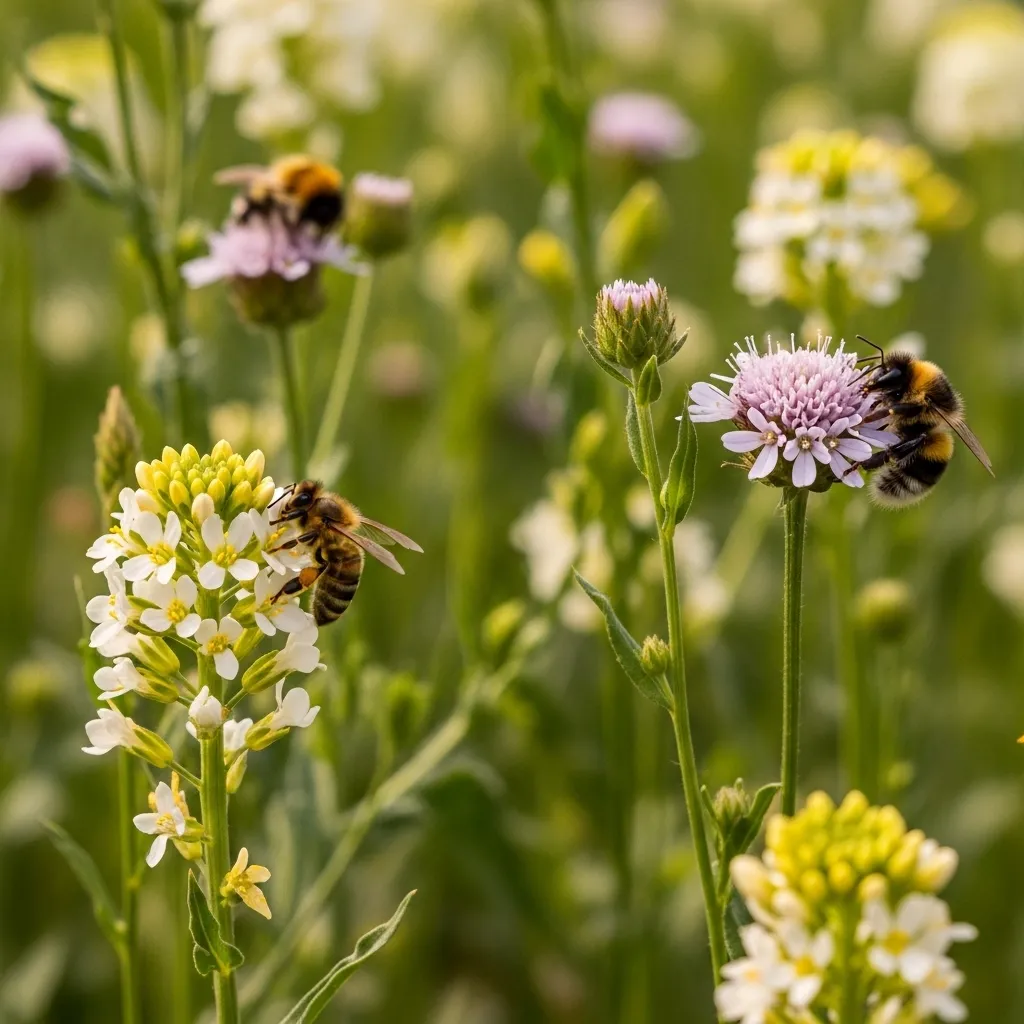
The importance of bees in ecosystem function extends far beyond pollination numbers. Honey bees dominate commercial pollination due to their manageable hives, large populations, and transportability. In the United States, managed honey bee colonies pollinate crops worth over $15 billion annually. California’s almond orchards require 1.8 million honey bee colonies each February—approximately 70% of all managed colonies nationwide.
However, bumblebees increasingly prove essential for specific crops. Greenhouse tomato production worldwide relies almost exclusively on commercially-reared bumblebee colonies because these crops require buzz pollination. Studies show tomato yields increase 50-75% with bumblebee pollination, blueberry crops produce 20-30% larger yields with both species present, and pumpkins show improved fruit set with early-morning bumblebee visits.
Research consistently demonstrates that wild pollinators, including bumblebees, contribute 25-50% of total pollination services even when honey bee hives are present. Agriculture crop pollination by bees proves most effective when multiple species are present.
Beyond agriculture, bumblebees serve critical roles in wild plant reproduction. Native wildflowers, particularly those with deep corolla tubes or buzz pollination requirements, depend heavily on bumblebee specialists. Bumblebees visit a broader diversity of plant species than honey bees, making them crucial for maintaining botanical biodiversity.
Acknowledging their biodiversity role reveals complementarity: honey bees excel in high-density agricultural settings; bumblebees offer specialized pollination and support plant diversity that sustains entire ecosystems. Both species also serve as food sources for birds, spiders, and other predators, while bee parasites represent specialized ecological niches. The decline of bee populations reverberates through entire food webs.
Threats, Conservation, and How Humans Can Help
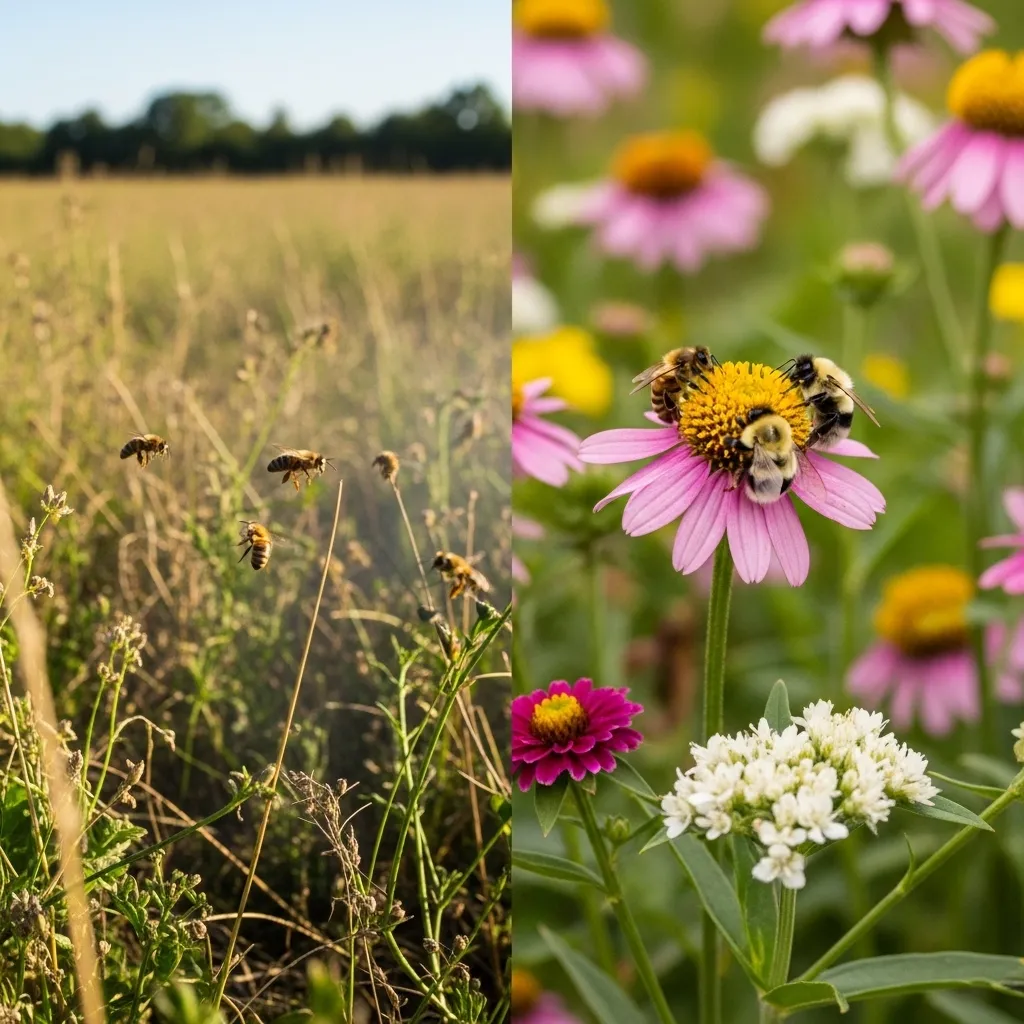
Both species face serious conservation challenges. Honey bee populations experience alarming colony losses, with U.S. beekeepers reporting 30-50% annual losses. Primary threats include Varroa mites, pesticides (especially neonicotinoids), diseases, nutritional stress from habitat loss, and management stress from commercial operations.
Bumblebee conservation is more urgent. Four North American bumblebee species have declined by 96% in recent decades. Critical threats include habitat loss from intensive agriculture and urbanization, pesticide exposure, climate change affecting queen hibernation and emergence timing, pathogen spillover from commercial colonies, and genetic bottlenecks in isolated populations.
Individual actions create meaningful bee conservation and environmental impact:
Plant diverse native flowers that bloom from early spring through late fall, providing continuous nutrition. Prioritize early bloomers for emerging bumblebee queens and late bloomers for pre-hibernation feeding.
Eliminate harmful pesticides: Avoid neonicotinoids and broad-spectrum insecticides. Use integrated pest management strategies and apply treatments only in early morning or evening.
Provide nesting habitat: Leave areas of bare, undisturbed ground, maintain brush piles and unmowed margins, and install bee hotels. Leave dead wood and don’t clean up all garden debris in fall.
Protect hibernation sites: Allow leaf litter and soft soil to remain undisturbed through winter. Delay spring cleanup until temperatures consistently reach 60°F.
Support organic agriculture: Purchase organically-grown food to reduce pesticide use and support farming practices that maintain diverse crop rotations and hedgerows.
Reduce lawn areas: Convert grass lawns into wildflower meadows or diverse garden beds that provide far more pollinator resources.
Create water sources: Provide shallow water dishes with landing stones so bees can drink safely.
Collective action by gardeners, farmers, and policymakers can reverse pollinator declines and protect the countless species that depend on healthy pollinator communities.
Quick Comparison Table
| Characteristic | Honey Bee | Bumblebee |
|---|---|---|
| Size | 12-15mm, slender build | 15-25mm, robust build |
| Appearance | Smooth, amber and black stripes | Very fuzzy, bold yellow and black |
| Colony Size | 20,000-80,000 individuals | 50-400 individuals |
| Colony Lifespan | Perennial (years) | Annual (one season) |
| Nest Location | Constructed hives, cavities | Underground burrows, grass clumps |
| Winter Survival | Entire colony survives | Only fertilized queens survive |
| Honey Production | 30-100+ pounds per colony | Negligible (few grams) |
| Buzz Pollination | Cannot perform | Expert buzz pollinators |
| Foraging Temperature | Above 55°F (13°C) | Down to 40°F (4°C) |
| Sting Type | Barbed (single use, bee dies) | Smooth (multiple stings possible) |
| Temperament | Gentle on flowers, defensive near hive | Very docile, rarely aggressive |
| Tongue Length | 6-7mm | Up to 20mm (species-dependent) |
How to Identify Each Bee in Your Garden
Confident identification of the honey bee vs bumblebee requires observing several characteristics simultaneously.
Honey Bees: Look for a slender body profile with golden-brown or amber coloration. They appear proportionally longer relative to width and lack extreme fuzziness. In flight, honey bees move quickly between flowers with direct flight paths, visiting dozens of blooms in quick succession. Their higher-pitched hum is quieter than bumblebees’ buzz.
Bumblebees: Create an unmistakable impression with their chunky build and dense fur coat that appears round and plush. Most species display vivid yellow and black bands. Their flight is characteristically slower with considerable hovering. They often spend more time at individual flowers and may be observed gripping blossoms while vibrating—the telltale sign of buzz pollination. Their loud, low-pitched buzzing is distinctly louder.
Quick Identification Tips: If you can see the bee’s body surface clearly through sparse hairs, it’s likely a honey bee. If completely covered in dense, plush fuzz, it’s a bumblebee. On cool mornings below 55°F or overcast days, any active bee is almost certainly a bumblebee. The first bees of spring (March-April) are typically large, solitary bumblebee queens.
Conclusion
The honey bee vs bumblebee comparison reveals two remarkable pollinators with complementary strengths, distinct ecological roles, and separate conservation needs. Honey bees excel as manageable agricultural pollinators with massive colonies, extensive honey production, and proven commercial value. Bumblebees shine as cold-tolerant specialists, buzz pollination experts, and essential wild pollinators supporting plant biodiversity.
Both face serious threats—honey bees from parasites and diseases; bumblebees from habitat loss and climate change—yet both can be protected through conscious human action. By planting diverse native flowers, eliminating harmful pesticides, preserving nesting and hibernation sites, and supporting conservation policies, every gardener contributes to pollinator protection.
The differences between honey bees and bumblebees ultimately highlight a fundamental ecological principle: biodiversity matters. No single pollinator species can fulfill all pollination needs. Protecting both honey bees and bumblebees—and the hundreds of other bee species sharing our landscapes—ensures the importance of bees in ecosystem function continues supporting life on Earth for generations to come.
Frequently Asked Questions
1. What is the main difference between honey bee and bumblebee pollination techniques?
The most significant difference is that bumblebees perform buzz pollination (sonication), rapidly vibrating their flight muscles at 400+ Hz to release pollen from tube-shaped anthers in tomatoes, blueberries, and peppers—a technique honey bees cannot perform. Additionally, bumblebees work in cooler temperatures (down to 40°F) and forage longer hours, while honey bees excel at visiting massive numbers of flowers during optimal conditions and show greater flower constancy.
2. Do bumblebees make honey like honey bees?
Bumblebees produce small amounts of honey-like nectar stores (just a few grams per colony) for short-term use during poor weather, but these minimal stores aren’t surplus production. Honey bees create 30-100+ pounds of honey per colony annually, with sophisticated enzymes and low water content that allows long-term storage. Only honey bees produce commercially viable honey quantities.
3. Are bumblebees more aggressive than honey bees?
No, bumblebees are generally more docile than honey bees and rarely sting unless directly threatened or their nest is disturbed. They can be observed closely on flowers without concern. Honey bees are also gentle away from their hives but become significantly more defensive near their colonies, especially during peak honey storage periods. Both species pose minimal threat during normal garden activities.
4. Why are both honey bees and bumblebees important for agriculture and ecosystems?
Honey bees provide massive workforce numbers for commercial crop pollination, are easily managed and transported, and pollinate crops worth billions annually. Bumblebees offer specialized pollination for crops requiring buzz pollination, work in weather conditions when honey bees cannot, and serve as crucial wild pollinators for native plants that maintain biodiversity. Research shows crop yields are highest when both species are present, as their different capabilities provide comprehensive pollination coverage.
5. How can I help conserve both honey bees and bumblebees in my area?
Plant diverse native flowers that bloom from early spring through fall, eliminate or drastically reduce pesticide use (especially neonicotinoids), provide undisturbed nesting habitat by leaving bare ground areas and unmowed margins, protect winter hibernation sites by maintaining leaf litter until spring, reduce lawn areas in favor of wildflower meadows, support organic agriculture through purchasing choices, and advocate for pollinator-friendly policies. Creating shallow water sources with landing platforms also helps both species thrive.
Protecting pollinators starts in your own garden—plant native flowers today and help both honey bees and bumblebees thrive.