Discovering a bumble bee nest in your garden can stop you in your tracks. Are they dangerous? Will they sting? Should you call pest control? The short answer: probably not. Bumblebees are among our most important pollinators, and their nests are temporary, fascinating, and — in most cases — perfectly safe to leave alone. This guide covers everything you need to know.
Table of Contents
What Does a Bumble Bee Nest Look Like? (The Quick Answer)
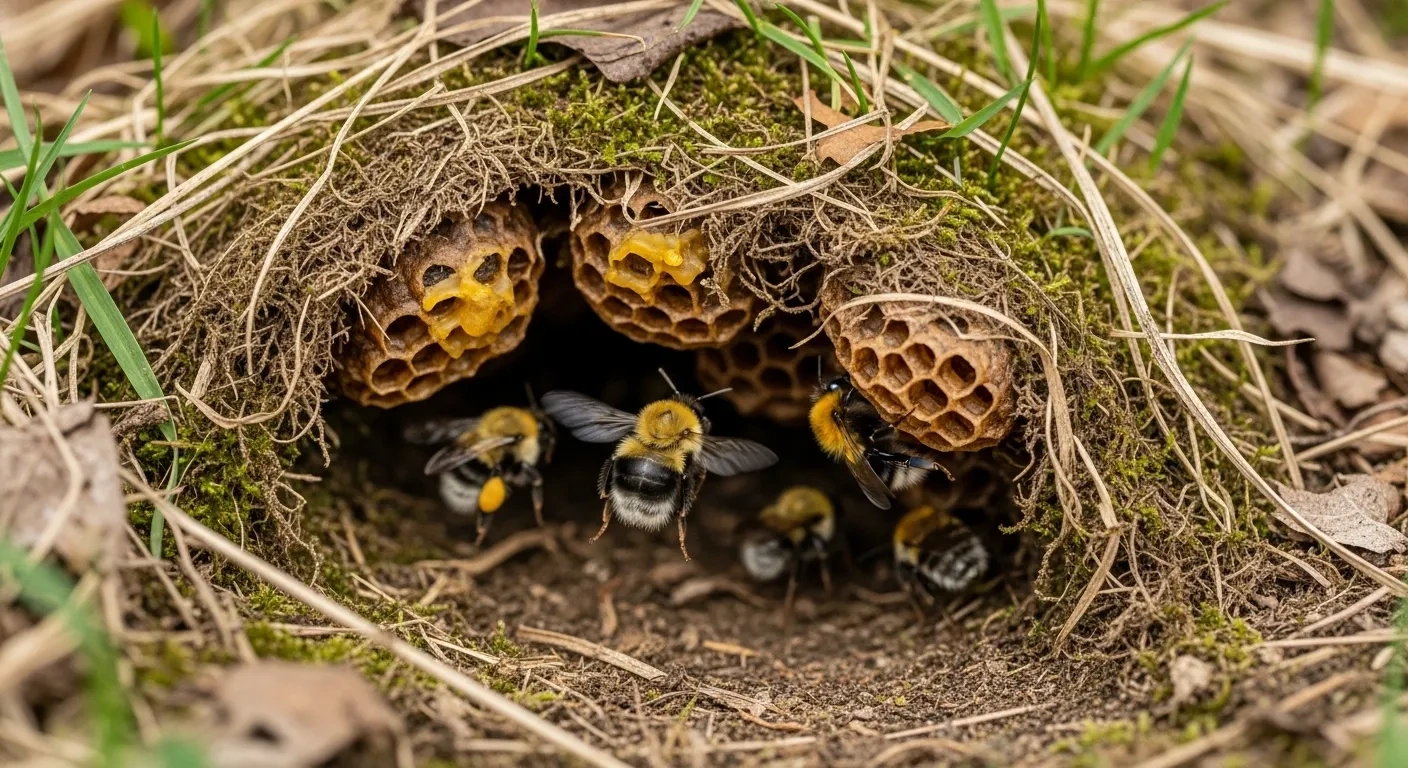
If you’re expecting the orderly golden honeycomb of a honeybee hive, a bumble bee nest will surprise you. Bumblebee nests look nothing like that — they are wonderfully chaotic, organic structures that blend almost seamlessly into their surroundings.
Quick Identification Facts
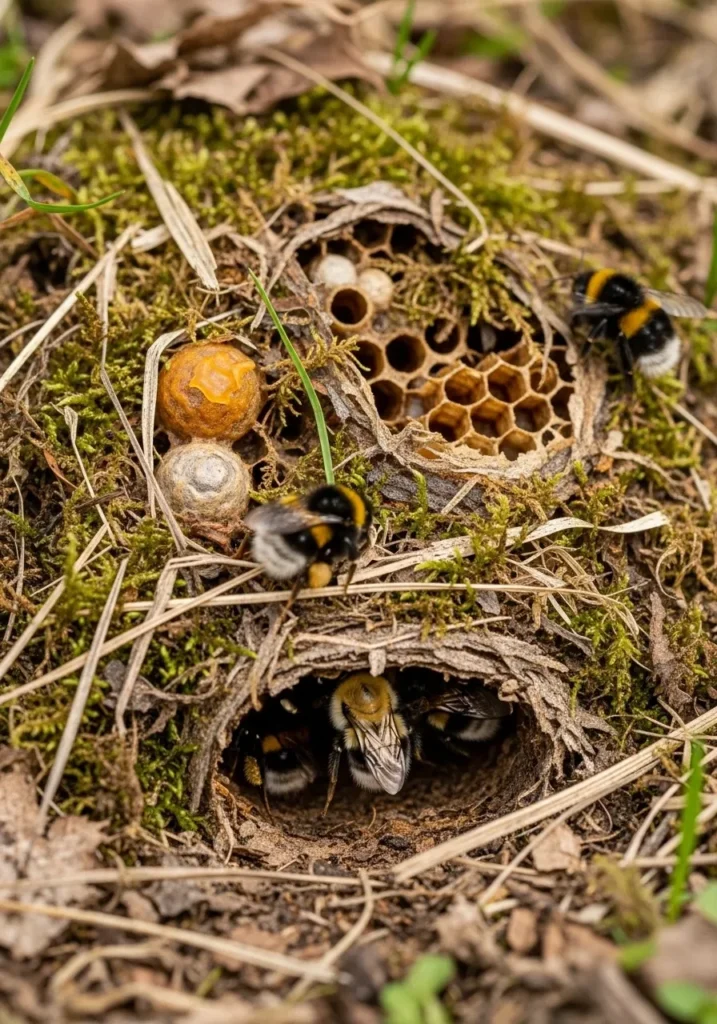
- Material: Messy mounds of grass, moss, dry leaves, pet fur, or insulation — never the hexagonal wax combs associated with honey bees.
- Interior: Small, irregular round wax “honey pots” (for food storage) and lumpy brood cells containing eggs, larvae, and pupae.
- Size: Typically the size of a grapefruit to a volleyball — housing between 50 and 400 bees depending on the species and season.
- Appearance: Often mistaken for a clump of debris, a worn patch of lawn, or simply a disturbed pile of leaves.
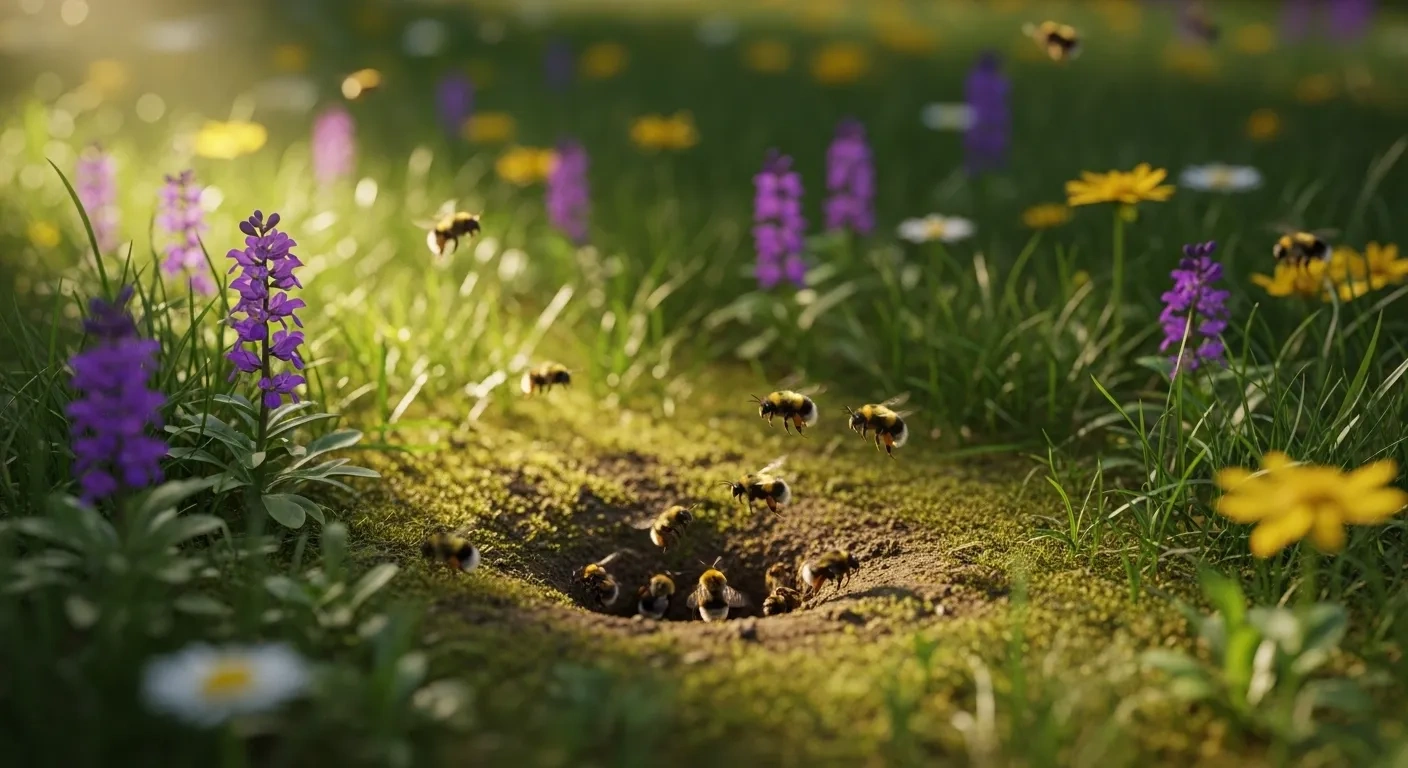
- Activity sign: Watch for a consistent, gentle stream of plump, fuzzy bees coming and going from a single low entry point.
Where Do Bumble Bees Build Their Nests?
One of the most common homeowner questions — right after “what does a bumblebee nest look like?” — is where to find one. Unlike honey bee hives, which often occupy vertical cavities, bumblebees nest low and discreetly. Understanding their preferred sites helps you identify and avoid accidental disturbance.
🪱Underground Sites
- Abandoned rodent burrows
- Under garden sheds
- Beneath decking or patios
- Old compost buried in soil
🌿Above-Ground Sites
- Dense tufts of thick grass
- Compost heaps
- Bird boxes or garden furniture
- Loft insulation (rare)
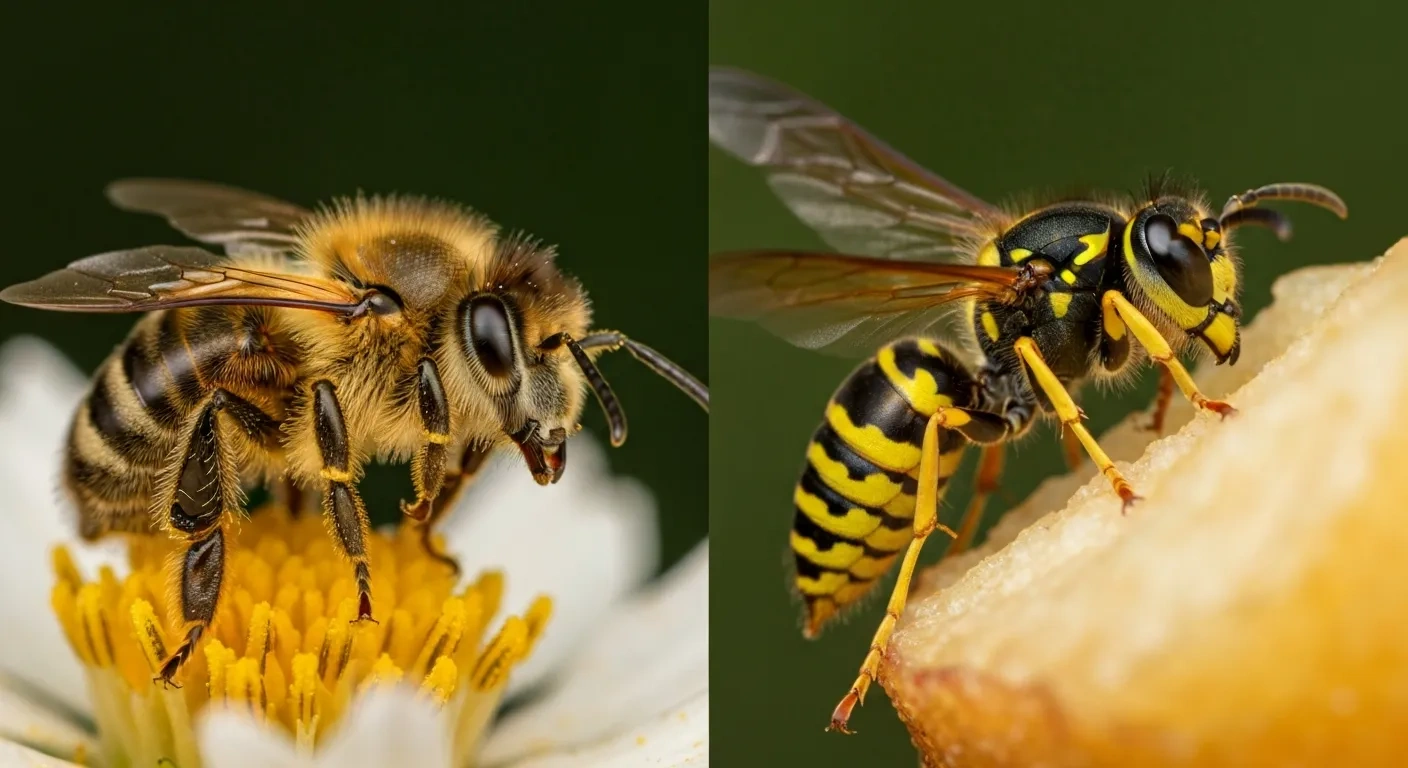
Bumble Bee Nest vs. Wasp Nest vs. Honey Bee Hive
Misidentification is common. Here’s a quick comparison to help you tell them apart at a glance:
| Feature | Bumble Bee Nest | Wasp Nest | Honey Bee Hive |
|---|---|---|---|
| Material | Grass, moss, fur — organic debris | Chewed wood pulp (“paper”) | Organized hexagonal wax comb |
| Location | Ground level or just below | Eaves, lofts, trees | Tree hollows, wall cavities |
| Colony Size | 50–400 | 3,000–10,000+ | 20,000–80,000 |
| Aggression | Low | High | Medium |
| Active season | Spring–Fall only | Summer–Fall peak | Year-round |
The Lifecycle of a Bumble Bee Nest
Every bumble bee nest has a story — and it begins with a single, extraordinary queen. Unlike honey bees, an entire bumblebee colony lives and dies within a single year. Here’s how that cycle unfolds:
🌸 Spring (March–May)
A mated queen emerges from her winter hibernation underground. She feeds voraciously on early spring flowers, searches for a suitable nest site, and begins laying eggs alone — building the first wax cells, collecting pollen, and incubating her eggs with body heat.
☀️ Summer (June–August)
The first worker bees hatch and take over foraging duties. The colony grows rapidly. The queen shifts to full-time egg-laying. This is when the nest reaches peak size and activity — bumble bee hives are at their busiest and most visible now.
🍂 Fall (September–November)
The colony shifts to producing new queens (gynes) and male drones. These mate, and the new queens fatten up on nectar before finding a sheltered spot underground to overwinter. The old colony — workers, drones, and the founding queen — dies off completely as temperatures drop.
Do Bumble Bees Reuse Nests? (Overwintering)
Key Fact for Homeowners
No — bumblebees never reuse an old nest. Only newly mated queens survive the winter, and they hibernate solo underground (often in loose soil or leaf litter), not in the old colony structure. By spring, the previous year’s nest is completely abandoned. This means if you find a bumblebees nest in late fall, it will be empty by December without any intervention needed on your part.
What to Do If You Find a Bumble Bee Nest
Speaking from experience working with bumblebee colonies — the first reaction most people have is to remove them immediately. In the vast majority of cases, this is the wrong call. Here’s a practical, honest guide to your real options.
Option 1: Leave It Alone (Recommended)
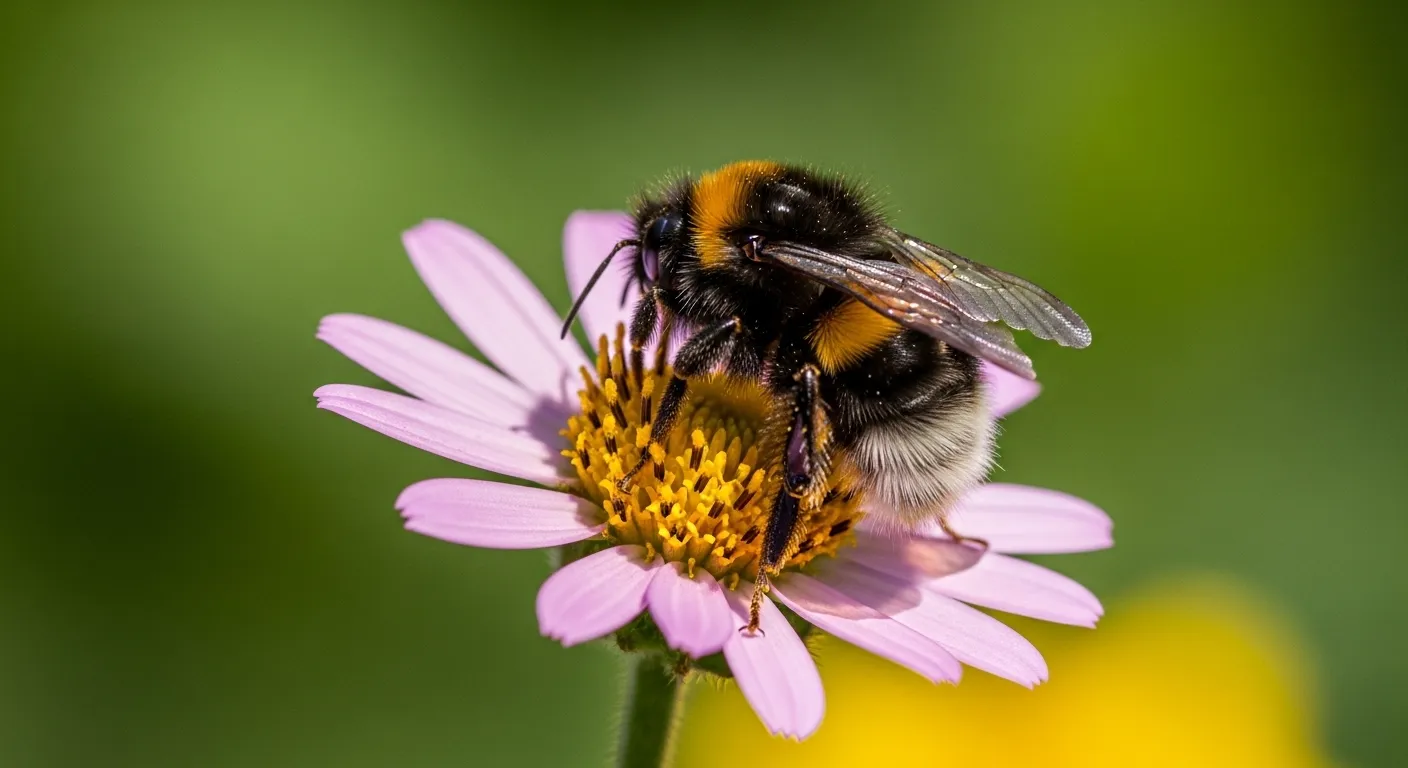
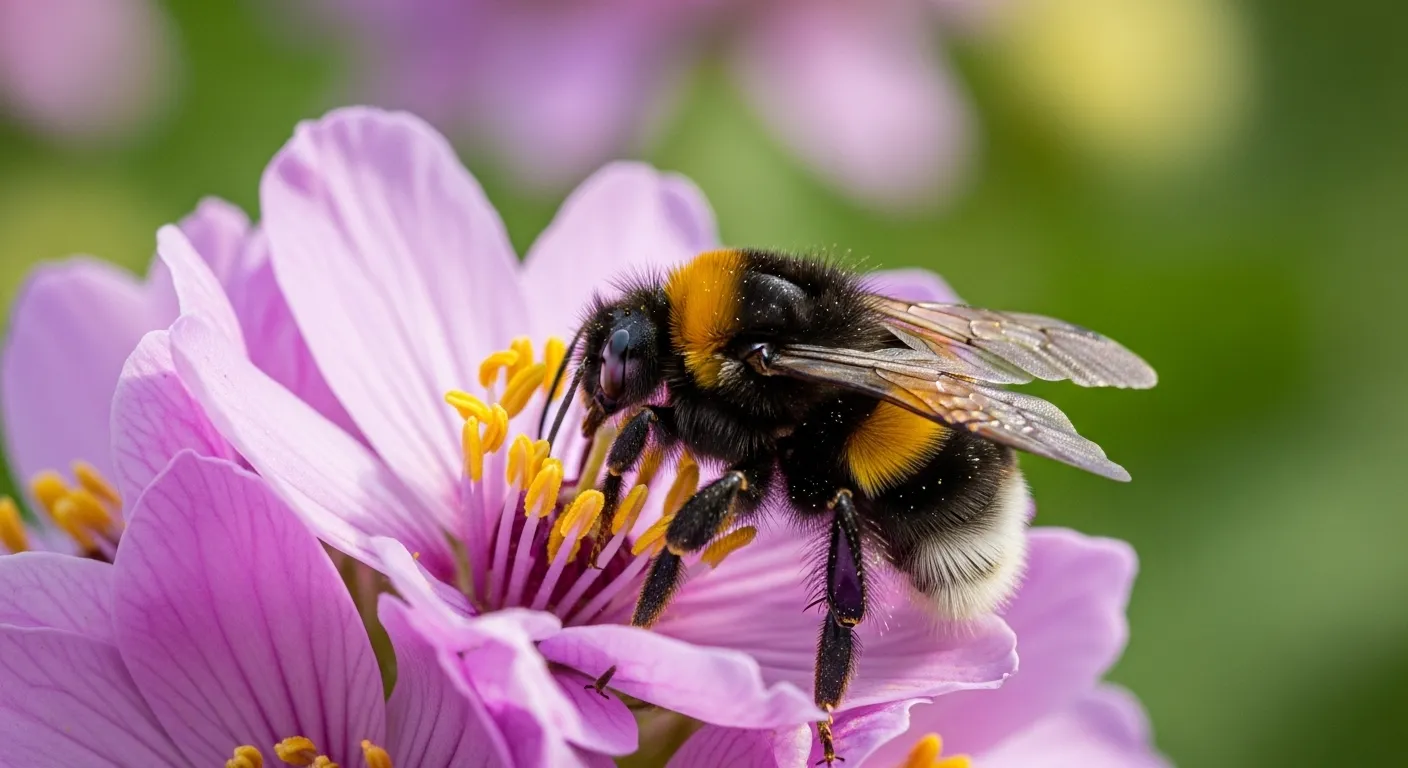
Bumblebees are remarkably docile compared to wasps or even honey bees. A nest in an undisturbed area of your garden poses virtually no threat. Workers focus almost entirely on foraging — they have little interest in humans unless the nest entrance is directly threatened or stepped on.
💡The nest will naturally die off by late fall. You will never need to “remove” it if you can simply wait a few months.
Option 2: Create a Safety Buffer
If the nest is near a lawn you regularly mow or a path people use, create a simple exclusion zone. Place a few garden canes around the nest entrance (about 50cm radius) and tie bright string between them — or simply reroute foot traffic. When mowing nearby, cut grass at the highest setting and move slowly; bumblebees respond to vibration, so gentle and predictable movements matter.
Can You Move a Bumble Bee Nest?
Relocating an active bumble bee nest is genuinely difficult and stressful for the colony — and rarely necessary. However, if the nest is in a location that poses a real safety risk (inside a child’s play structure, directly in a doorway), here is realistic advice:
- 1First, honestly assess the risk. Is the nest actually dangerous, or just inconvenient? Most perceived dangers don’t warrant intervention.
- 2Contact a local beekeeper association or wildlife group — many offer free or low-cost relocation services and can assess the situation in person.
- 3If professional removal is genuinely required, insist on a live relocation (not extermination). Reputable pest controllers will offer this for bumblebees.
- 4Do not attempt DIY removal without proper protective equipment and experience — disturbing a nest entrance directly is the primary trigger for defensive stinging.
“The single best thing most homeowners can do when they find a bumble bee nest is to mark the location, give it a wide berth, and let nature do the rest. By November, it will be gone.”
How to Build a Bumble Bee Nest Box
Want to attract bumblebees to your garden and support declining populations? Building a simple nest box — sometimes called a “bumble bee hive” in popular use — is one of the most effective conservation actions a homeowner can take. Here’s how to do it right, without the jargon of academic PDFs.
Materials Needed
Untreated timber (at least 15mm thick), upland cotton or dry moss for bedding, 20mm entry hole, screws (not nails), weatherproof exterior paint (optional, light colors only)
Recommended Dimensions
Internal space: approx. 15cm × 15cm × 10cm. Entry tunnel: 100mm long, 20mm diameter. Lid: hinged for annual cleaning.
- 1Build the box using untreated, rough-sawn timber. Smooth internal surfaces discourage nesting — queens prefer texture they can grip.
- 2Add a handful of upland cotton or dry moss inside as bedding material. This mimics the insulation of an abandoned rodent burrow.
- 3Drill a 20mm entry hole in the lower half of one side. Attach a short entry tube (a piece of bamboo or PVC pipe works well) pointing downward at a slight angle to prevent water ingress.
- 4Place the box in a shaded, east-facing location, off the ground (20–30cm ideal). Avoid south-facing positions — overheating is fatal to colonies.
- 5Be patient. Occupancy rates for nest boxes vary, but spring placement near wildflower patches dramatically improves uptake.
🌸Plant early-blooming flowers nearby — crocus, lungwort, and willow catkins are queen favorites and dramatically increase the likelihood your box is chosen.
Frequently Asked Questions
Do bumble bees make honey in their nests?
Yes — but only in very small quantities. Those waxy “honey pots” inside a bumble bee nest contain enough nectar for immediate colony use, typically only a few days’ worth. Bumblebees do not store large honey reserves the way honey bees do, which is why there’s no commercial bumblebee honey industry. This also means their colonies cannot survive winter — there’s no food stockpile to sustain them.
How many bumble bees live in a nest?
A typical bumblebee nest houses between 50 and 400 individuals, depending on the species and time of year. Early in spring, a new colony may contain fewer than 20 bees. By midsummer, colonies of the buff-tailed bumblebee (Bombus terrestris) can reach 400 workers. This is dramatically smaller than a honey bee colony, which helps explain their comparatively gentle temperament — they simply have less to defend.
Do bumble bees defend their nests?
Yes, if the nest entrance is physically disturbed or threatened. Unlike honey bees, bumblebees are capable of stinging multiple times (they do not have a barbed stinger). However, unprovoked attacks are extremely rare. Foraging workers away from the nest are almost never aggressive. The primary risk comes from accidentally stepping on or vibrating the nest entrance itself — so as long as you’re aware of the nest location and give it space, the risk of being stung is very low.
What types of bumblebees build nests in the UK and US?
There are many types of bumblebees across both regions. In the UK, the most common nesters are the buff-tailed bumblebee (Bombus terrestris) and the common carder bee (Bombus pascuorum). In North America, the yellow-banded (Bombus terricola), rusty-patched (Bombus affinis — endangered), and two-spotted bumblebee are frequently encountered. While all share broadly similar nesting habits, species vary in preferred sites, colony size, and activity season.
How do I remove bumble bees safely if I absolutely must?
If you genuinely need to know how to remove bumble bees from a property, always contact a professional beekeeper or wildlife handler first — many will relocate the colony for free. Avoid DIY extermination products: bumblebees are protected under wildlife legislation in many regions, and killing them where alternatives exist may be illegal. If waiting until fall is possible, the problem resolves itself naturally. A local beekeeping association is always your best first call.