A bumblebee sting can be painful and unsettling, especially if you’ve never been stung before. While most people experience only temporary pain and mild swelling, some individuals may develop serious allergic reactions requiring immediate medical attention.
Bumblebees are generally gentle insects that sting only when threatened or defending their nest. Understanding what happens during a sting, recognizing the difference between normal and dangerous symptoms, and knowing how to respond can help you manage the situation safely.
This guide provides medically accurate information about bumblebee sting symptoms, treatment options, and warning signs that indicate you need emergency care.
Table of Contents
Do Bumblebee Sting Humans?
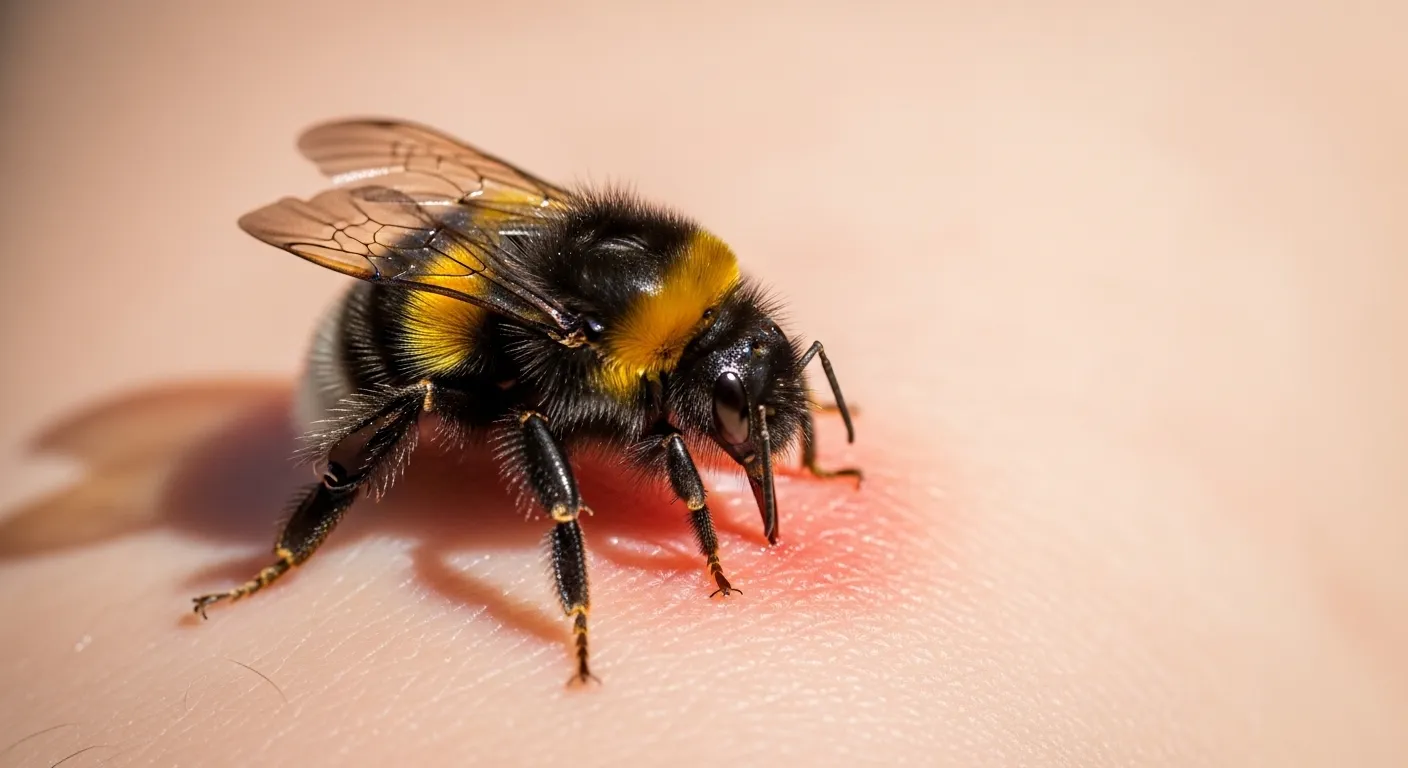
Yes, bumblebees can sting humans, but they are far less aggressive than many other stinging insects. Female bumblebees possess a smooth stinger connected to a venom sac, which they use primarily for defense.
Bumblebees typically sting only when:
- Handled or touched directly
- Stepped on with bare feet
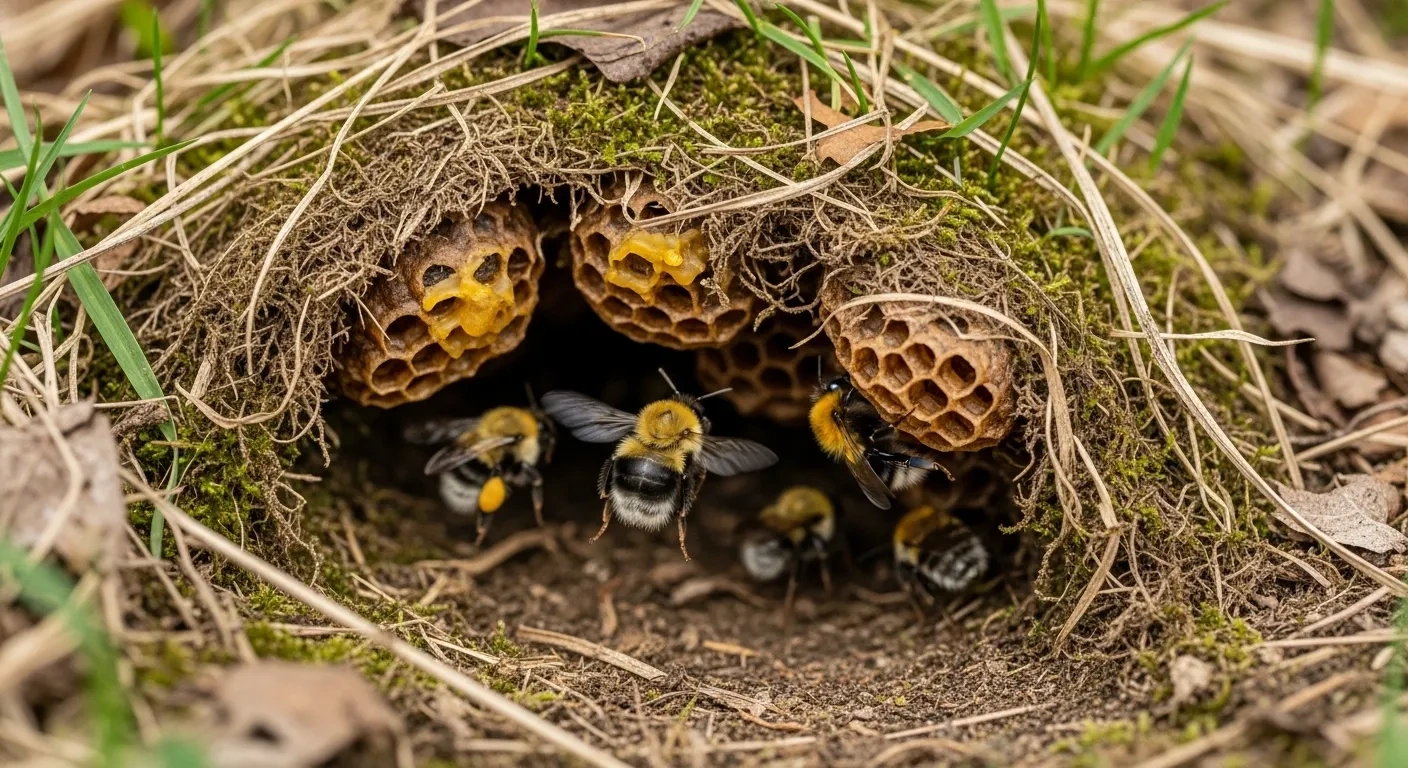
- Their nest is disturbed or threatened
- Trapped against skin or clothing
- Perceiving immediate danger to their colony
Male bumblebees cannot sting because they lack stingers entirely, meaning roughly half of the bumblebees you encounter pose no stinging risk. Bumblebees are generally docile and prefer to fly away from threats. They often buzz loudly as a warning before stinging, making bumblebee stings relatively uncommon compared to wasp or yellow jacket encounters.
What Happens Immediately After a Bumblebee Sting?
When a bumblebee stings, it pierces the skin and injects venom containing proteins and peptides that trigger an immediate inflammatory response in your body.
The stinging process:
- Immediate sensation: Sharp, burning pain like a hot needle piercing skin occurs at the exact moment of contact
- Venom injection: The bumblebee releases venom through the stinger directly into tissue. Unlike honeybees, bumblebees can withdraw their smooth stinger and potentially sting multiple times, though they rarely do so
- Inflammatory response: Your immune system immediately recognizes the venom as foreign and releases histamine and other chemicals, triggering redness, warmth, swelling, and pain
- Duration: Initial sharp pain subsides within a few minutes, transitioning to throbbing or burning that may persist for several hours
Most people experience only localized symptoms confined to the sting site and surrounding tissue.
Common Symptoms of a Bumblebee Sting
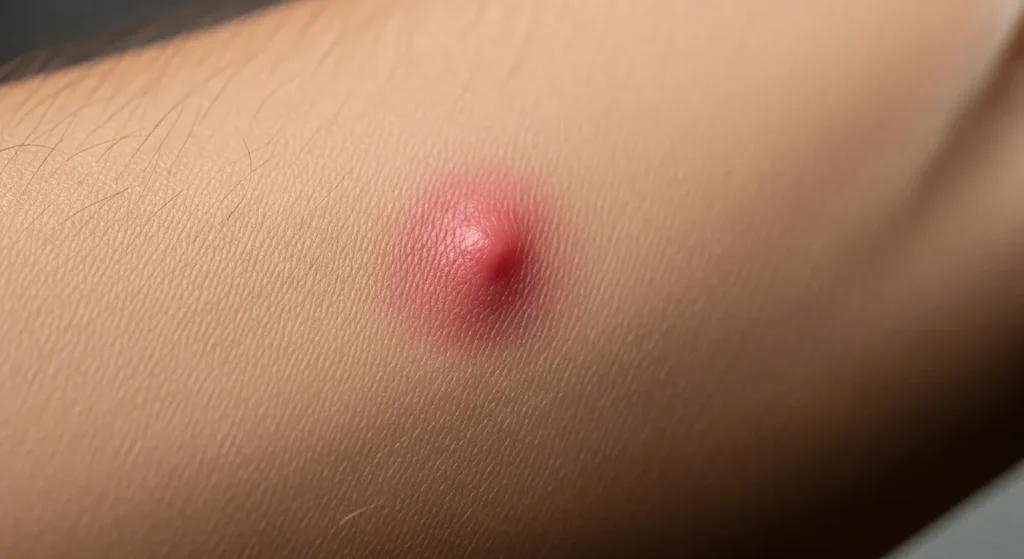
Symptoms depend largely on whether you have an allergy to bee venom. For most people without allergies, symptoms remain at the sting site.
Typical local symptoms:
- Sharp, immediate pain that gradually decreases over the first hour
- Red, raised welt at the sting site, often with a pale center
- Swelling around the area, usually 1-2 inches in diameter
- Warmth and tenderness when touched or pressed
- Itching that develops after initial pain subsides, typically within 2-4 hours
- Small white spot at the center where the stinger penetrated
Symptom progression timeline:
Understanding how symptoms typically evolve helps you recognize whether your reaction is following a normal pattern.
First 15 minutes: Pain is most intense and sharp. The area becomes red and a small welt forms. This is when anaphylaxis would most likely begin if you’re allergic.
15 minutes to 2 hours: Acute pain diminishes to a dull ache or throbbing. Swelling begins to spread slightly beyond the immediate sting site.
2 to 24 hours: Pain continues to decrease and becomes manageable. Swelling reaches its initial peak. The area may feel firm due to fluid accumulation.
24 to 48 hours: Swelling reaches maximum extent. Itching often becomes more prominent than pain during this phase.
48 hours to 5 days: Swelling gradually decreases. Itching may persist but becomes less intense.
5 to 7 days: Most symptoms have resolved. Mild itching or a small mark may remain as the skin completes healing.
Stings on areas with loose tissue (face, eyelids, hands) tend to swell more dramatically than other body parts due to the tissue’s ability to accumulate fluid.
Local Reaction vs Allergic Reaction
Understanding the difference between a normal local reaction and an allergic reaction is critical for determining appropriate response.
Local reaction (normal, non-allergic):
A local reaction affects only the area around the sting site. Symptoms include pain, redness, and swelling confined to a few inches around the puncture.
Large local reactions can extend beyond 4 inches from the sting site and may involve an entire limb. For example, a sting on the forearm might cause swelling from wrist to elbow. These reactions can last 5-10 days but are still classified as non-allergic if they don’t involve systemic symptoms.
Mild to moderate allergic reaction:
An allergic reaction involves your immune system overreacting to venom, affecting parts of your body distant from the sting site.
Symptoms include:
- Hives or welts appearing on skin far from the sting
- Generalized itching affecting multiple body areas
- Widespread skin redness or flushing
- Mild swelling of lips, face, or other areas not near the sting
- Nausea, cramping, or digestive discomfort
- Mild anxiety or feeling of unease
Even mild allergic reactions warrant medical evaluation because approximately 25-30% of people who experience mild systemic reactions may have more severe reactions with future stings.
Warning Signs of Severe Allergy and Anaphylaxis (Medical Emergency)
Anaphylaxis is a severe, potentially fatal allergic reaction that can develop within minutes of a bumblebee sting. It occurs when your immune system releases massive amounts of chemicals that cause shock and system-wide inflammation.
Critical symptoms indicating anaphylaxis:
Respiratory symptoms:
- Shortness of breath or difficulty breathing
- Wheezing, gasping, or whistling sound when breathing
- Chest tightness or feeling unable to get enough air
- Throat closing or swelling sensation
- Difficulty swallowing or speaking
- Hoarse voice or complete voice loss
Cardiovascular collapse:
- Rapid, weak, or irregular pulse (above 100 beats per minute at rest)
- Dizziness, lightheadedness, or feeling faint
- Significant drop in blood pressure
- Loss of consciousness or fainting
- Pale, gray, or blue-tinged skin, especially lips and fingernails
Severe skin reactions:
- Extensive hives covering large body portions
- Severe swelling (angioedema) of face, lips, tongue, or throat
- Extreme flushing or sudden paleness
Gastrointestinal crisis:
- Severe nausea or vomiting
- Intense abdominal cramping or pain
- Diarrhea
Neurological symptoms:
- Confusion, disorientation, or altered mental status
- Extreme anxiety or sense of impending doom
- Slurred speech
Timeline of anaphylaxis:
Anaphylaxis typically begins within 5-30 minutes of a sting, though it can occasionally develop up to an hour later. The faster symptoms appear after a sting, the more severe the reaction tends to be.
In approximately 20% of cases, anaphylaxis is biphasic—symptoms improve temporarily after treatment, then return 4-12 hours later. This is why emergency room observation is crucial even after successful epinephrine treatment.
IMMEDIATE ACTION REQUIRED:
If anyone shows signs of anaphylaxis:
- Call 911 immediately – State clearly that someone is having an allergic reaction
- Administer epinephrine auto-injector if available (EpiPen, Auvi-Q) – Do not delay
- Position appropriately – Lie flat with legs elevated if blood pressure is dropping; sit upright if breathing is severely compromised
- Prepare for CPR if the person becomes unresponsive
- Use second epinephrine dose if symptoms don’t improve within 5-15 minutes
- Transport to emergency room even if symptoms completely resolve
Never assume that improvement means the danger has passed. All cases of anaphylaxis require emergency department evaluation.
What to Do Immediately After Being Stung (First Aid Steps)
Proper immediate care can significantly reduce pain, minimize swelling, and help you monitor for developing complications.
Step 1: Move to a safe location
Calmly walk away from where you were stung. Bumblebees may release alarm pheromones when they sting. Move at least 50-100 feet away or go indoors.
Step 2: Check for a stinger
Examine the sting site carefully. Bumblebees typically don’t leave stingers behind due to their smooth, retractable design.
If a stinger is present:
- Remove it immediately—within the first 30 seconds if possible
- Scrape it out using a credit card edge, fingernail, or knife blade
- Use a firm, swift scraping motion
- Avoid grasping with tweezers, which can squeeze more venom into the wound
- Speed of removal is more important than technique
Step 3: Clean the wound
Wash the sting site gently with soap and cool water for at least 20 seconds. This removes bacteria and remaining venom on the skin surface, reducing infection risk. Pat dry with a clean towel.
Step 4: Apply cold therapy

Cold application is one of the most effective initial treatments:
- Wrap ice or an ice pack in a thin towel
- Apply to the sting site for 10-15 minutes
- Remove for 10 minutes, then reapply
- Continue this cycle for the first 1-2 hours
- Cold constricts blood vessels, slowing venom absorption and reducing swelling
Step 5: Elevate the affected area
If the sting is on an arm or leg, elevate it above heart level using pillows. Maintain elevation as much as possible for the first 24 hours to minimize swelling.
Step 6: Monitor symptoms closely
Watch for symptoms spreading beyond the sting area, especially during the first 30-60 minutes when anaphylaxis is most likely. Check every 15 minutes for hives, breathing difficulties, throat tightness, or dizziness.
Step 7: Take oral antihistamine
If you have no contraindications, take an over-the-counter oral antihistamine:
Follow label instructions or consult a healthcare professional.
- Diphenhydramine (Benadryl) 25-50mg for adults works quickly but may cause drowsiness
- Cetirizine (Zyrtec) 10mg or loratadine (Claritin) 10mg are non-drowsy alternatives
This helps reduce itching and may modestly decrease swelling.
Home Treatment and Pain Relief Options
For uncomplicated bumblebee stings producing only local reactions, several evidence-based remedies provide relief.
Continued cold therapy:
Apply cold compresses for 10-15 minutes every 2-3 hours throughout the first day. After 24 hours, reduce frequency to 3-4 times daily as needed.
Over-the-counter pain relievers:
Follow label instructions or consult a healthcare professional.
Ibuprofen (Advil, Motrin) 200-400mg every 6-8 hours:
- Reduces both pain and inflammation
- Most effective when started early and taken regularly for the first 24-48 hours
- Take with food to minimize stomach irritation
Acetaminophen (Tylenol) 500-1000mg every 6 hours:
- Reduces pain without anti-inflammatory effect
- Good option for people who can’t take NSAIDs
- Does not reduce swelling as effectively as ibuprofen
Oral antihistamines:
Continue taking antihistamines every 12-24 hours for 3-5 days or until itching resolves:
- More effective for preventing symptoms when taken regularly rather than as needed
Topical treatments:
Hydrocortisone cream (0.5-1%):
- Apply a thin layer to the sting site 2-3 times daily
- Reduces itching and inflammation
- Most effective when started within the first 24 hours
- Can be used for up to 7 days
Calamine lotion:
- Provides cooling sensation and itch relief
- Can be applied as often as needed
Activity and care guidelines:
- Avoid scratching: Scratching can introduce bacteria and prolong healing
- Keep the area clean: Wash daily with mild soap and water
- Avoid tight clothing: Wear loose clothing over the sting site
- Stay hydrated: Drinking water helps your body process and eliminate venom
Medical Treatment and the Role of Epinephrine
While most bumblebee stings can be managed at home, certain situations require professional medical intervention.
When doctors provide treatment:
For large local reactions:
- Oral corticosteroids (prednisone) to reduce severe swelling
- Prescription-strength antihistamines
- Close monitoring to ensure reaction doesn’t progress
For mild to moderate allergic reactions:
- Injectable or high-dose oral antihistamines
- Corticosteroids to prevent delayed reactions
- Observation period (typically 4-6 hours)
- Referral to allergist for testing
- Prescription for epinephrine auto-injectors if appropriate
Epinephrine: Life-saving medication for anaphylaxis
Epinephrine (adrenaline) is the only medication proven to reverse anaphylaxis. It must be given as soon as anaphylaxis is suspected.
How epinephrine works:
- Relaxes smooth muscles in airways to restore breathing within 3-5 minutes
- Constricts blood vessels to raise dangerously low blood pressure
- Strengthens heart contractions
- Reduces swelling in throat and face
- Prevents further release of allergic mediators
Using an epinephrine auto-injector:
- Remove the device from its protective carrier
- Form a fist around the device with the colored tip pointing downward
- Remove the safety cap by pulling straight up
- Place the tip firmly against the outer mid-thigh at a 90-degree angle
- Push down hard until you hear a click
- Hold firmly in place for 3 seconds (EpiPen) or 10 seconds (Auvi-Q)
- Remove and massage the injection site for 10 seconds
- Note the time of injection
- Call 911 if not already done
The injection can be given through clothing if necessary.
Who should carry epinephrine auto-injectors:
- Anyone with previous anaphylaxis to any insect sting
- History of severe allergic reactions to bee venom
- Positive allergy testing showing venom sensitivity
- Multiple allergies that increase anaphylaxis risk
Prescriptions typically include two auto-injectors because a second dose is sometimes necessary.
Emergency department care:
Hospital treatment may include:
- Additional doses of epinephrine
- Intravenous fluids to support blood pressure
- Oxygen therapy
- Inhaled bronchodilators for wheezing
- Intravenous antihistamines and corticosteroids
- Observation for 4-12 hours
- Hospital admission for severe reactions
Venom immunotherapy:
For people with documented severe venom allergy, allergists may recommend immunotherapy:
- Regular injections of gradually increasing venom amounts
- Typically administered weekly, then monthly for 3-5 years
- Reduces future severe reaction risk by 90-98%
- Highly effective but requires commitment
When to Call a Doctor or Go to the Emergency Room
Call 911 or go to the ER immediately if:
- Any signs of anaphylaxis appear (difficulty breathing, throat swelling, widespread hives, dizziness)
- Known severe allergy to insect stings
- Multiple stings occurred (more than 10-20 in adults, more than 5 in children)
- Sting inside the mouth, throat, or near the eyes
- Chest pain, irregular heartbeat, or severe dizziness
- Severe swelling of face, lips, tongue, or throat
- Confusion, loss of consciousness, or seizures
Contact your doctor within 24 hours if:
- Swelling continues to worsen after 48 hours
- Redness spreads beyond the initial sting area
- Signs of infection develop
- Hives or itching appear away from the sting site
- Pain is severe and not controlled with medication
- Swelling interferes with joint movement
Signs of infection (appear 24-72 hours after sting):
- Pain increases rather than decreases
- Red streaks extending from the sting site
- Warmth and expanding tender area
- Pus or discharge
- Fever above 100.4°F (38°C)
- Swollen lymph nodes near the sting
People at Higher Risk of Severe Reactions
Highest risk groups:
Previous systemic allergic reaction: Anyone who has experienced a systemic reaction to any insect sting faces 40-60% risk of a similar or worse reaction with subsequent stings.
Adults over age 40: Severe reactions and anaphylaxis-related deaths are significantly more common in adults than children. Risk increases with age.
Cardiovascular disease: Pre-existing heart conditions mean that the cardiovascular stress of anaphylaxis poses greater danger.
Severe asthma: Respiratory symptoms during allergic reactions can be more severe and life-threatening in people with asthma.
Medications that increase risk:
- Beta-blockers: Can make anaphylaxis more severe and reduce epinephrine effectiveness
- ACE inhibitors: May increase severity of allergic reactions
Medical conditions:
- Mastocytosis: Rare disorder dramatically increasing anaphylaxis risk
- Elevated baseline tryptase levels: Blood marker indicating higher anaphylaxis risk
Occupational exposure:
People working outdoors face higher statistical risk:
- Beekeepers and agricultural workers
- Gardeners and landscapers
- Park rangers and outdoor educators
- Construction workers
Protective measures for high-risk individuals:
- Carry two epinephrine auto-injectors always
- Wear medical alert bracelet identifying venom allergy
- Educate family and coworkers about recognizing anaphylaxis
- Consider venom immunotherapy with allergist
- Develop written emergency action plan
- Replace expired auto-injectors promptly
How to Avoid Being Stung by a Bumblebee

Behavioral precautions:
Stay calm near bumblebees: Sudden movements, swatting, or aggressive behavior provoke defensive stinging. If a bumblebee lands on you, remain still and it will typically fly away.
Watch your step: Bumblebees often nest in ground burrows, compost piles, or dense vegetation. Always wear closed-toe shoes outdoors.
Inspect before sitting: Check outdoor furniture, picnic blankets, and ground areas before sitting.
Manage food and drinks: Keep food covered at picnics, use lids on drinks, and check containers before drinking. Clean up spills immediately.
Avoid strong scents: Perfumes, scented lotions, and floral patterns can attract bees. Choose unscented products and solid-colored clothing.
Protective clothing:
When gardening or in areas with known bee activity:
- Wear long sleeves, long pants, and closed-toe shoes
- Choose light colors—bees are more attracted to dark colors
- Select smooth fabrics over rough textures
- Tuck pants into socks when walking through tall grass
- Wear gloves for gardening
Property management:
Check your property monthly during warm months for nests in:
- Abandoned rodent burrows or holes
- Compost bins and piles
- Dense shrubbery and overgrown areas
- Under decks, sheds, and outdoor structures
- Tall grass and unmowed sections
If you discover a nest:
- Maintain distance of at least 10-15 feet
- Contact professional pest control for removal if necessary
- Never attempt to destroy a nest yourself
Yard maintenance:
- Keep grass mowed
- Clear brush piles and yard debris
- Fill in old rodent burrows
- Trim overgrown vegetation
Response if approached:
- Remain calm and move slowly away
- Walk steadily toward indoor shelter
- If many bees are present, protect your face and eyes
- Don’t swat or flail your arms
- Seek enclosed shelter if available
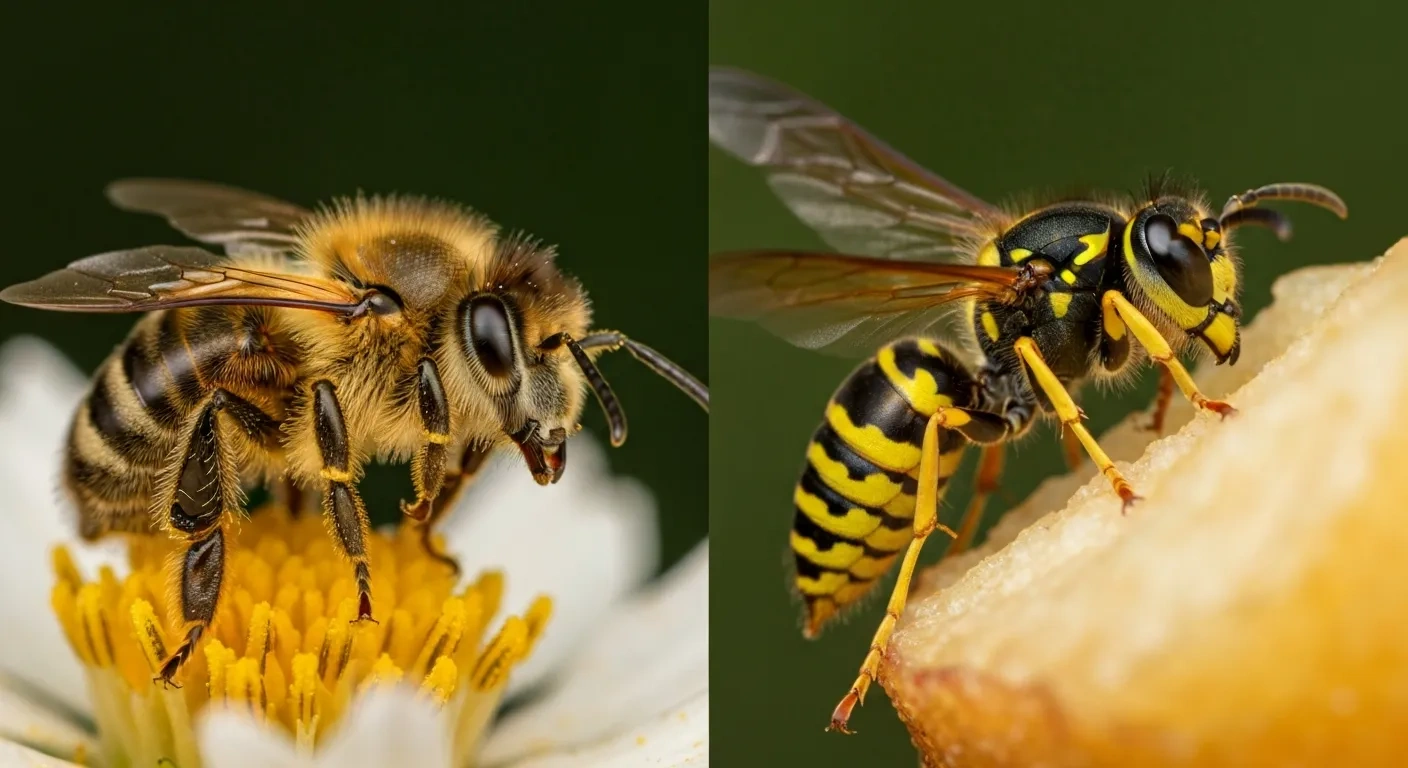
Bumblebee Sting vs Honeybee vs Wasp Sting
Bumblebee stings:
- Smooth, retractable stinger
- Rarely left behind in skin
- Can sting multiple times but typically doesn’t
- Moderate venom injection
- Moderate pain level
- Very docile behavior
- Bee survives after stinging
Honeybee stings:
- Barbed stinger that hooks into skin
- Almost always remains embedded with venom sac
- Can sting only once—dies afterward
- Moderate to high venom amount
- Moderate to severe pain
- More defensive than bumblebees
- Bee dies because stinger tears from abdomen
Wasp and yellow jacket stings:
- Smooth, easily withdrawn stinger
- Never left behind
- Can sting repeatedly in rapid succession
- Can deliver multiple venom doses
- Generally more painful—sharp, intense burning
- Significantly more aggressive
- Wasp survives unharmed
Practical identification:
- Stinger embedded in skin = Almost certainly honeybee
- No stinger, near flowers = Likely bumblebee
- Multiple stings, no stinger = Probably wasp or yellow jacket
- Very aggressive, persistent attack = Most likely wasp
Allergic reactions:
Bee venoms (bumblebee and honeybee) share similar protein components and often cause cross-reactivity. Wasp venoms have different compositions. Allergy testing can determine your specific sensitivities.
Frequently Asked Questions
Do bumblebees die after stinging?
No, bumblebees do not die after stinging. Unlike honeybees with barbed stingers, bumblebees have smooth stingers that withdraw cleanly. This allows them to sting multiple times if necessary, though their gentle nature means they rarely do. Only female bumblebees can sting since males lack stingers.
How long do swelling and pain last after a bumblebee sting?
Acute sharp pain lasts a few minutes, transitioning to dull ache within 1-2 hours. Most pain resolves within 24 hours. Swelling typically peaks at 24-48 hours and gradually decreases over 2-5 days. Large local reactions may cause swelling persisting 5-10 days. If swelling worsens after 48 hours or lasts beyond 10 days, consult a healthcare provider.
Can a bumblebee sting cause anaphylaxis?
Yes, though uncommon, bumblebee stings can trigger anaphylaxis in people with severe venom allergies. Anaphylaxis causes difficulty breathing, throat swelling, widespread hives, dangerous blood pressure drop, rapid pulse, and potentially loss of consciousness. Symptoms typically begin within 5-30 minutes. Anyone experiencing anaphylaxis requires immediate epinephrine injection and emergency medical care.
What relieves bumblebee sting pain quickly?
Cold compress or ice pack wrapped in cloth provides fastest relief by numbing the area. Apply for 10-15 minutes immediately after the sting. Over-the-counter pain relievers like ibuprofen (200-400mg) or acetaminophen (500-1000mg) work within 20-30 minutes. Combining immediate cold therapy with oral pain medication provides optimal relief.
Should a stinger be removed after a bumblebee sting?
Bumblebees typically don’t leave stingers in skin. However, if you find a stinger embedded, remove it immediately—ideally within 30 seconds. The attached venom sac continues pumping toxin for up to 30 seconds. Scrape the stinger out using a flat edge rather than grasping with tweezers. Speed of removal matters more than technique.
Are children more at risk of severe reactions?
Children have lower rates of severe systemic reactions and anaphylaxis compared to adults, despite being stung more frequently. Children experiencing only mild allergic symptoms rarely progress to severe reactions with future stings. However, any child showing anaphylaxis signs requires immediate epinephrine and emergency care. Children’s smaller body mass means multiple stings can be more dangerous.
When is a bumblebee sting dangerous?
A bumblebee sting becomes dangerous when it triggers anaphylaxis or involves multiple simultaneous stings. Warning signs include difficulty breathing, facial or throat swelling, widespread hives, rapid heartbeat, severe dizziness, drop in blood pressure, or confusion. These symptoms indicate life-threatening anaphylaxis requiring immediate epinephrine and 911 call. Stings inside the mouth or throat are dangerous because swelling can obstruct airways.
Can someone be allergic to bee stings without knowing?
Yes, many people discover venom allergy only after being stung. While anaphylaxis on a very first sting is rare, it can occur. More commonly, first stings produce mild allergic symptoms indicating developing sensitivity. Allergies can develop at any life stage. People with family history of venom allergies or multiple environmental allergies have higher risk. Those concerned about potential allergy can discuss testing with an allergist.
Medical Disclaimer
This article provides general educational information about bumblebee stings and is not intended to replace professional medical advice, diagnosis, or treatment. Always consult a qualified healthcare provider regarding medical conditions. If you experience difficulty breathing, throat swelling, or widespread hives, call 911 immediately.
This content is reviewed for accuracy using trusted medical sources but is not a substitute for professional care.